
Dear Fellow Investors and Friends,
Welcome to my newsletter, where I share my efforts to understand markets and the world around me.
I do appreciate you taking the time to read this. I love getting feedback; feel free to drop me a line. It’s great to start conversations.
Welcome to this edition of my newsletter, where I share my efforts to understand markets and the world around me.
Today is Thursday, November 26th, the 330th day of the year. There are 35 days left in the year. If you need to get something done, you have at just over 2 weeks to do so. Builders’ holiday starts on December 12th. After that, you’re on your own until January 10th.
On this day in 1922, Charles M Schulz was born. He created Charlie Brown, Snoopy and the Peanuts comic strip, which became a global entertainment and licensing franchise. Here’s one I came across recently, which is highly topical today:
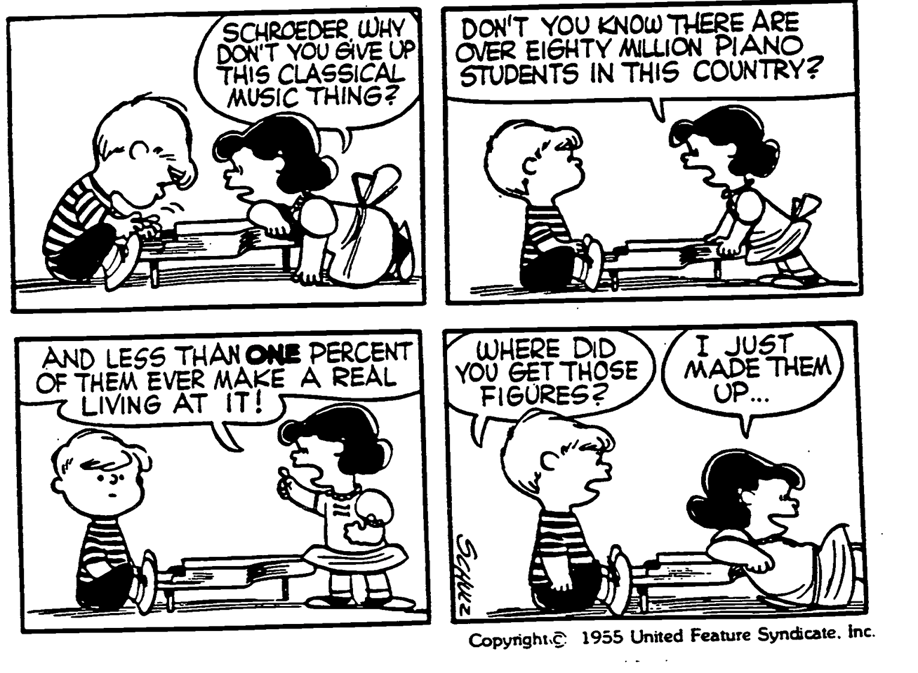
Lucy tries to convince Linus to give up the piano – by making up some numbers. This sounds a lot like the arguments the AI boosters are making to justify current capex levels.
But now it’s all crashing down – or is it? For a couple of days there, it felt like it. Putting our feelings to one side – as any good investor does – let’s examine the situation as it stands now.
First, a few questions:
- For markets to crash, we need to be in a bubble first. Are we?
- Are markets actually crashing?
- If not, are they still vulnerable to a crash?
Let’s deal with them one by one.
Earlier this year, Jeremy Grantham of GMO, with Edward Chancellor, published a paper titled “Valuing AI: Extreme bubble, new golden era, or both” Their conclusion: we are in a US stock market and AI bubble. In part 2, Chancellor provides a detailed classification of the stages of a bubble and compares the current AI bubble to past innovation bubbles. Reading through the list, it’s uncanny how closely the current environment matches previous bubbles.
In summary, a bubble ignites when four forces show up at the same time:
• extreme prices,
• reckless borrowing,
• frenzied, widespread gambling, and
• impossible growth math.
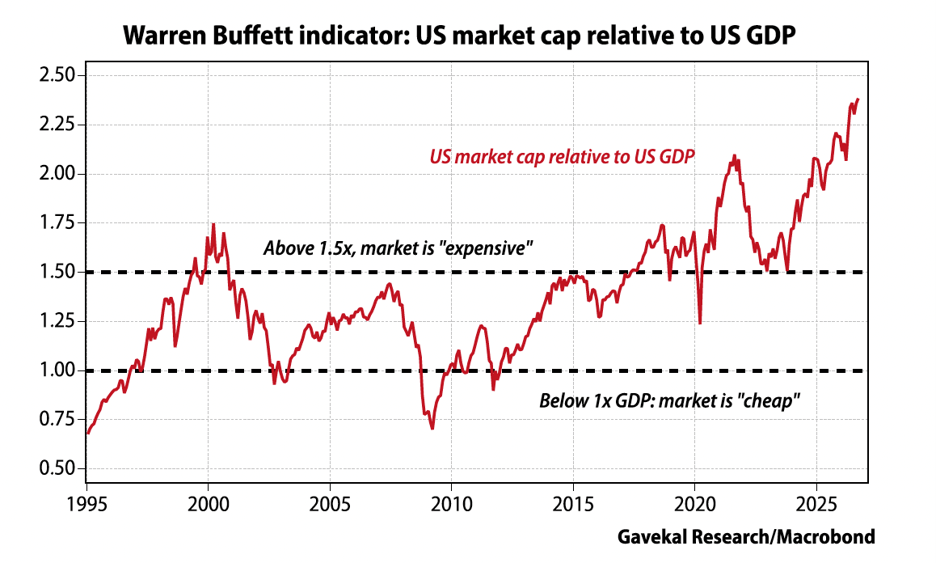
Looking at stock market prices in the USA, one could say they are at an extreme:
The borrowing situation is more nuanced. Household debt relative to disposable income is below its long-term average. But government finances are just about out of control. For the fourth consecutive year, the USA will run a deficit before borrowing of over 6% of GDP. Never before in non-recession, non-war times has this happened.
AI represents the biggest infrastructure boom ever in the USA, dwarfing the railway and internet buildouts. It is increasingly being financed by debt. More worryingly, much of this debt is off-balance-sheet. Even more worryingly, much of the buildout is financed through circular transactions.
Something like this:
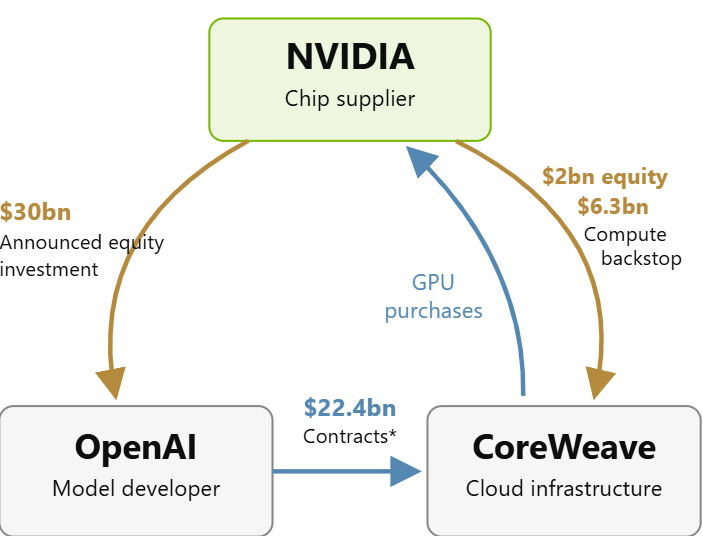
This is not sustainable. Ultimately, independent paying customers must support the chain. There is no doubt they will come, but when will they come, and how much will they pay? The intriguing parallel with the TMT bubble is that investors may again be right about the technology while overestimating returns.
As for gambling, sports betting has grown by a factor of 13 in 6 years – from revenue of $13bn to $167bn. Prediction markets – used mainly for sports betting – turn over an annualised run rate of $1 trillion, from nowhere a few years ago.
In the stock market, you have a proliferation of zero-day-to-expiry stock options, meme stocks and meme coins, and leveraged single-stock ETFs, all of which are effectively gambling. I think it’s safe to say that America is experiencing an extraordinary democratisation of speculation.
As for impossible growth math, look no further than the capex plans of the major AI players. Based on a best estimate of capex spending of around $6-7 trillion, most analysts think it highly unlikely that the economic value available to AI infrastructure investors will be sufficient to justify the expenditure.
My view: all 4 bubble forces are present.
This brings us to the second question: Are markets crashing? Consider this:
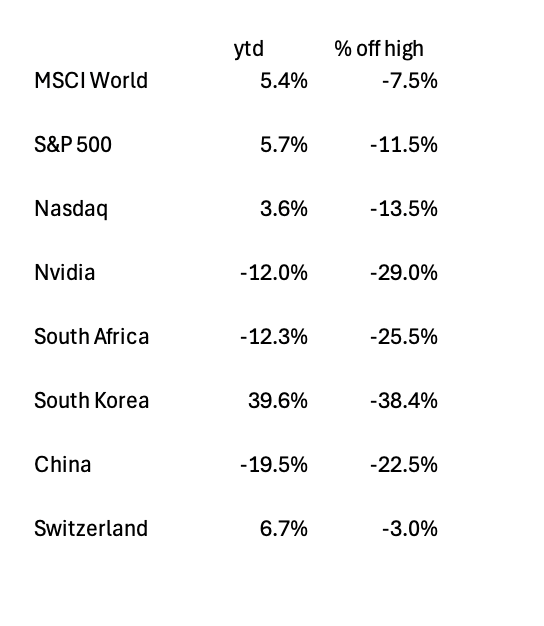
Most markets are still up year to date. That doesn’t look like a crash! Some markets (and stocks) are well off their most recent highs, but even the worst-performing one, South Korea, is still up for the year. The most comprehensive index of global stocks, the MSCI World, is also up year to date and only 7,5% off its high.
Even if it feels like the world is falling apart, the numbers show we have only suffered a mild setback. So, no – so far, the markets are not crashing.
But are we vulnerable? The short answer is yes – if parts of the market are in a bubble, we remain vulnerable to a crash. That doesn’t mean we should sell everything we own and go to cash.
Market timing is a mug’s game. Markets can remain irrational longer than you can remain solvent.
A better course is to reduce exposure to risky assets to a level that lets you sleep comfortably at night, whether a crash is coming or not. Always keep some dry powder to buy when everyone else finally capitulates.
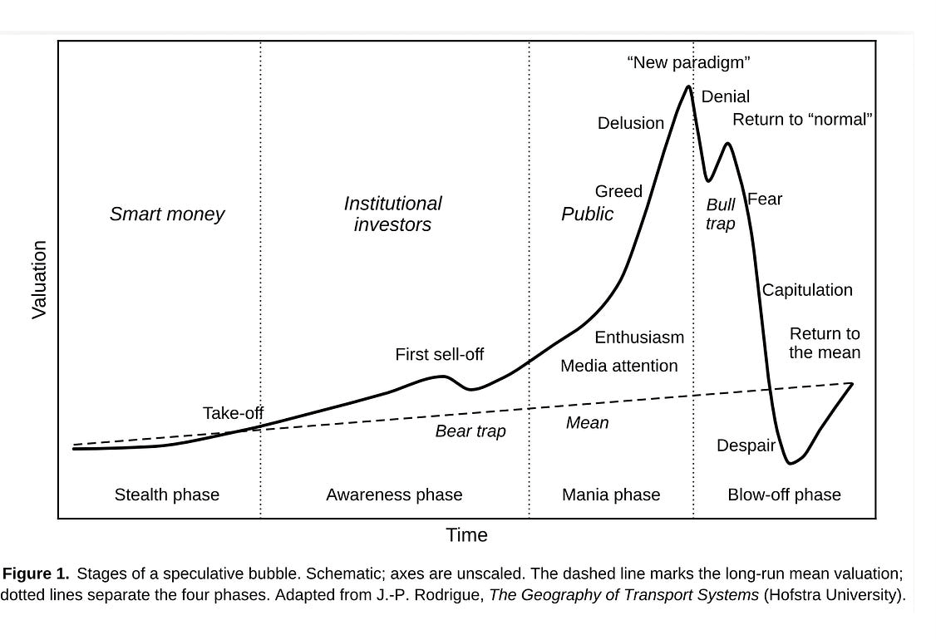
Here’s a schematic of a speculative bubble. With the reinstatement of a now seriously compromised Jensen Huang, we might just be in the “return to normal” phase of the cycle. A great opportunity to reduce exposure to the AI trade – if you have any to start with, of course!
In The Markets
1. Personally
I have investments in several companies, some of which released news over the last week. In no particular order:
a. Astoria
Astoria used to be a listed investment holding company. The market has no interest in small investment companies, so we delisted it at the end of last year. The price we offered investors then (R8,20) was a significant premium to the market price (c.R6,00), albeit at a discount to its then NAV per share of R12,22.
In the 6 months to June, the NAV has grown further to R15,13 per share.
This week, Astoria announced the next step in the restructuring process, which was set out a while ago. It is consolidating its shares on a 5000-for-1 basis. Shareholders with fewer than 5000 shares are being offered R14,50 per share. If you are such a shareholder, you have until 27 November to provide your banking details to receive payment. Full details of the process are available here.
b. Beagle
Beagle is a majority black-owned, private investment holding company. Its anchor investor is the RECM Foundation, and it also provides RECM’s staff, the staff of its wider “business family,” and friends and family with an additional investment opportunity that differs from our local and global unit trusts managed by our associate.
Yesterday, Beagle published its interim results for the period ended September 2026. You can read them here. Since inception, Beagle’s NAV per share has compounded at 24% p.a. As a result, it is one of the most successful BEE investment companies I know, and I’m a happy shareholder.
c. Merchant West Investment (MWI)
MWI is a small, institutional-quality investment manager with big aspirations. It was formed through a merger between RECM’s fund management business and Counterpoint Asset Management, followed by the acquisition of Bridge Fund Managers. Under the leadership of CEO Alyssa Viljoen (no relation!), it has built an investment team that blends youth and experience. Its investment performance is on par with or better than that of the big investment houses, and its size gives it greater flexibility.
I am excited about the quality of the team and its work. This week, they released their quarterly newsletter, On Point. Read it here and judge for yourself.
2. A Plump Roast
Last week I wrote about cyclical AI infrastructure stocks with low P/E ratios that look optically cheap. But the P/E is low because earnings are abnormally high. These stocks are capitalised at high multiples of their invested capital (high price-to-book ratios), which actually makes them expensive.
This week, I want to look at a cyclical stock that is also overearning and therefore has a low P/E. The stock is Astral Foods, a poultry producer. It released results this week, and due to lower imports and lower input (maize) prices, its revenue grew by only 3%, while earnings per share rose by over 100% to R44,39, resulting in a P/E below 5.
So, a low P/E on an overearning cyclical stock means it’s expensive, right?
Wrong.
Firstly, Astral is trading on a price-to-book ratio of just over 1, the lowest level ever:
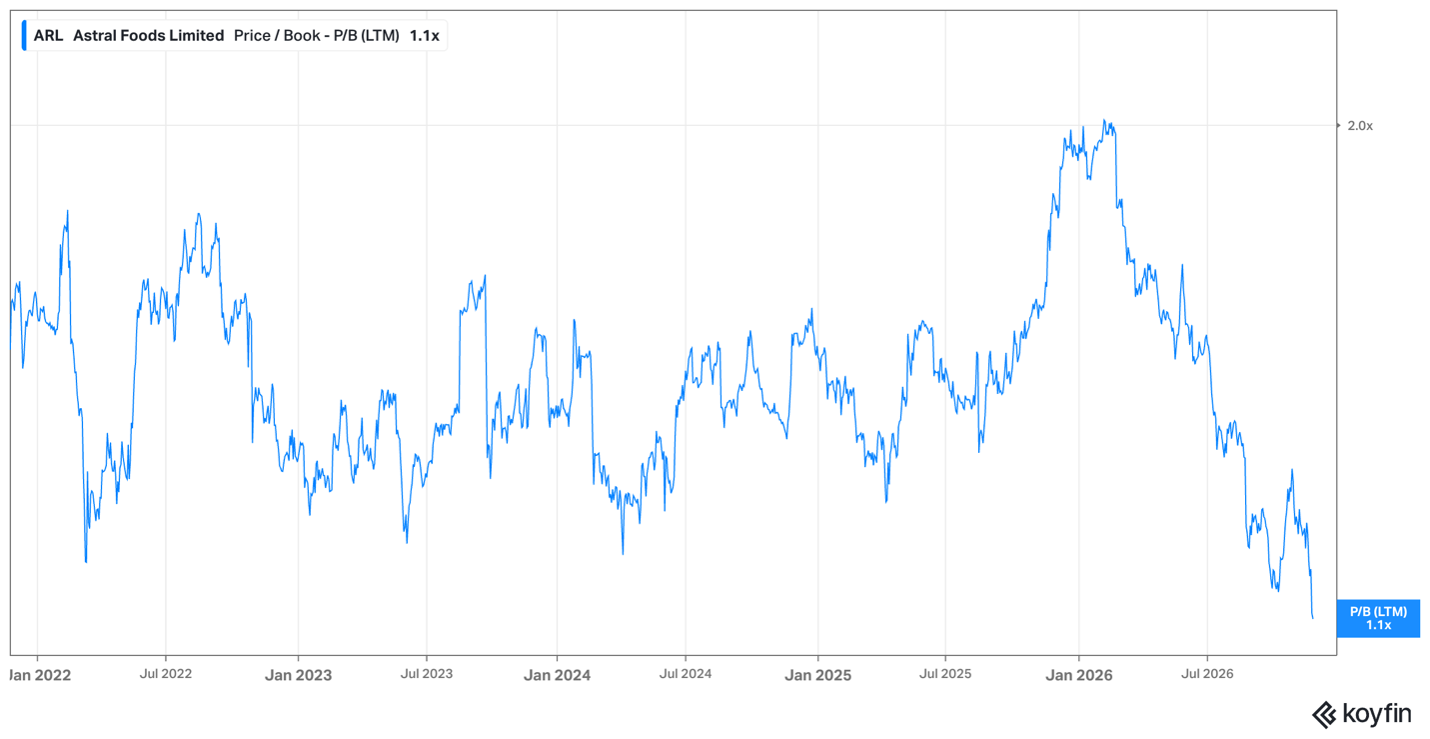
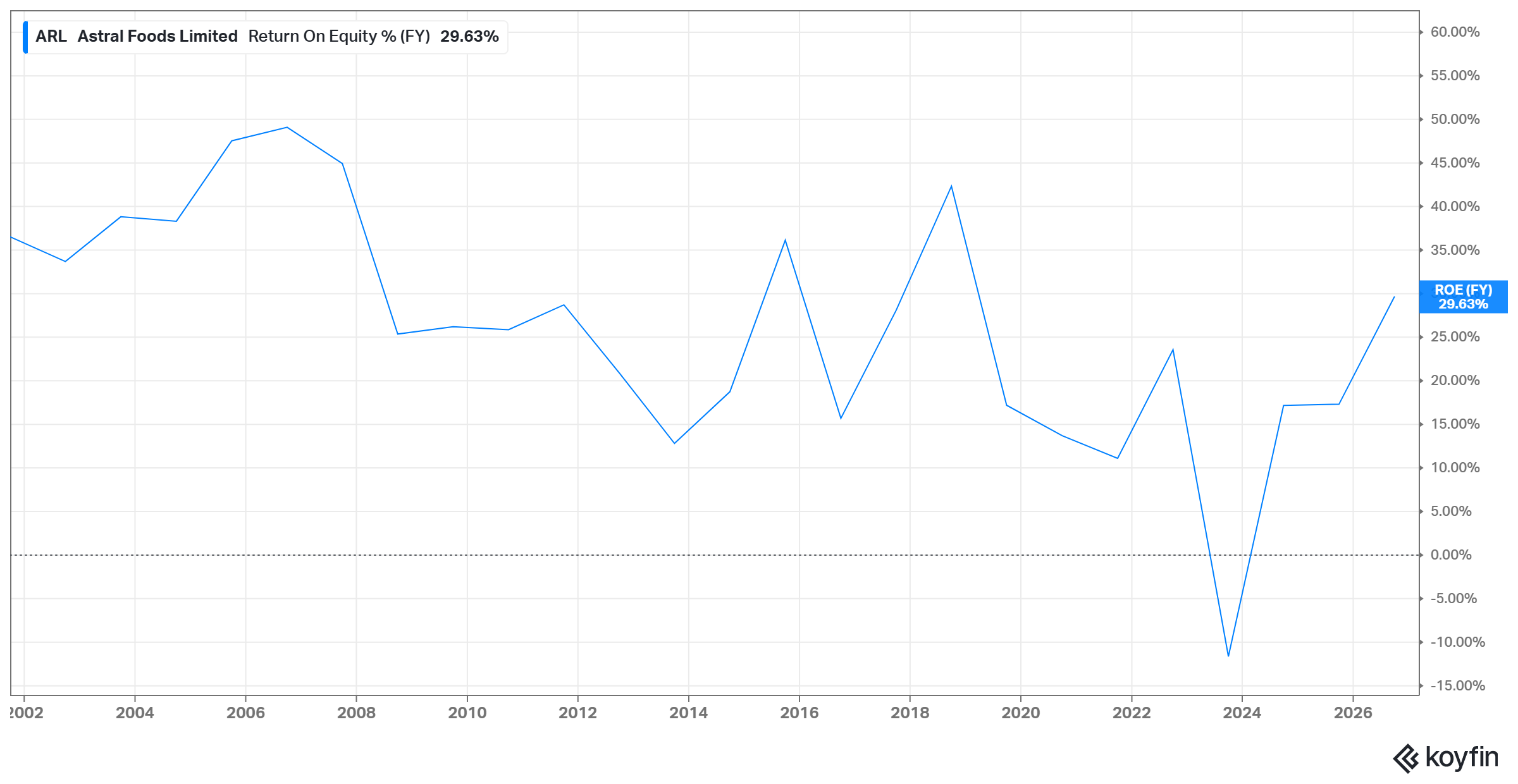
There don’t seem to be very high expectations built into this stock at all. Especially given the fact that Astral consistently generates high returns on its equity (i.e. book value), with almost no debt:
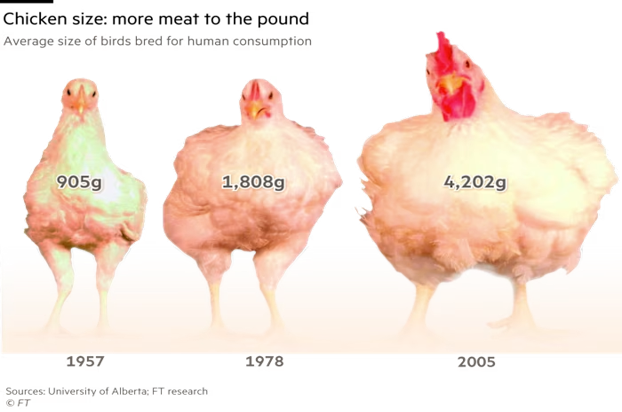
The second point is that the chicken business is a long-term growth business. Chicken is a cheap source of protein:
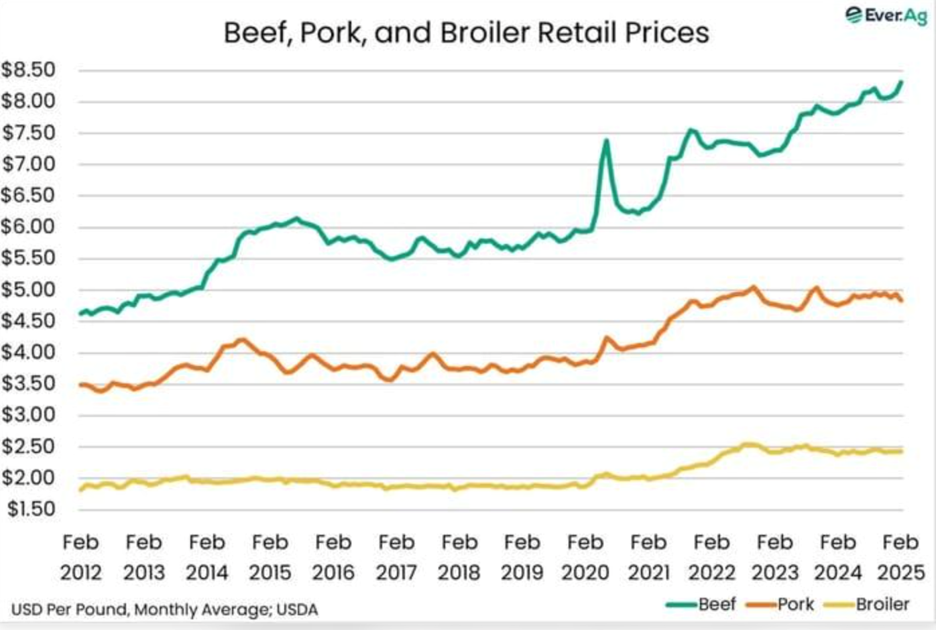
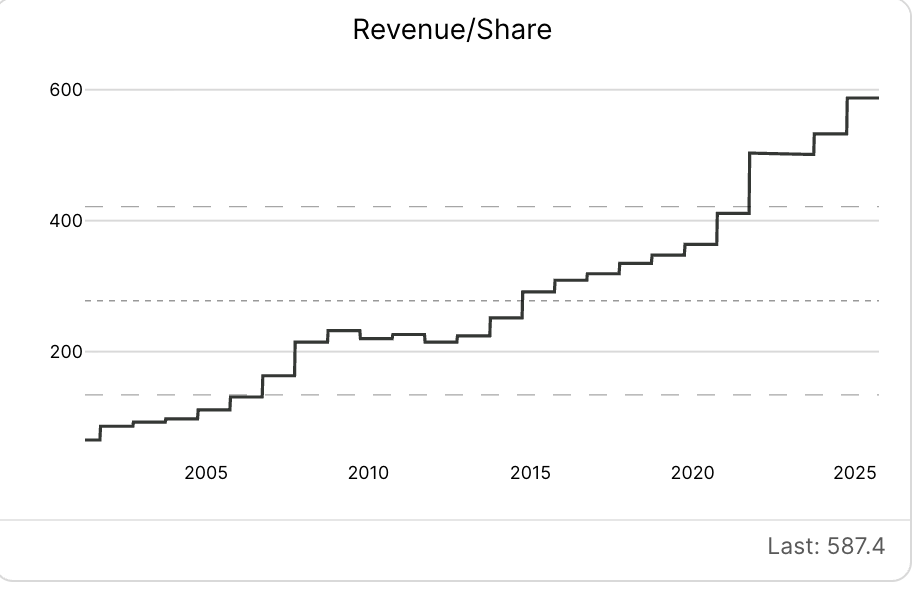
This allows companies like Astral to gain market share over time and grow revenue steadily. Here is Astral’s revenue per share over time, which looks like the graph of a growth company:
If you don’t trust the numbers, here’s a picture that proves the point:
And if you don’t trust that, then how about Homer Simpson uniting the world behind a message of peace and chicken?
My take: Astral is a high-quality growth company masquerading as a cyclical. It’s the exact opposite of the AI trade, and one that I am taking advantage of.
3. Return ticket, please
The story behind WeBuyCars (WBC) is a wonderful entrepreneurial story. Two brothers, Faan and Dirk van der Walt, came to a simple insight: selling a second-hand car was considerably more difficult than buying one. In 2001, using their savings, they founded WBC. They advertised their services in newspapers and on billboards, visited sellers at their homes or workplaces, inspected their vehicles, and paid them immediately, solving a significant problem for consumers.
For the first decade, the brothers handled virtually everything themselves, growing the business organically. They appointed their first additional buyers in 2012. By 2021, Transaction Capital (TC) had acquired 75% of the business, valuing it at R6.4bn. Unfortunately, TC ran into trouble, and in 2024, WBC was listed separately at R20 per share, valuing the business at approximately R8bn.
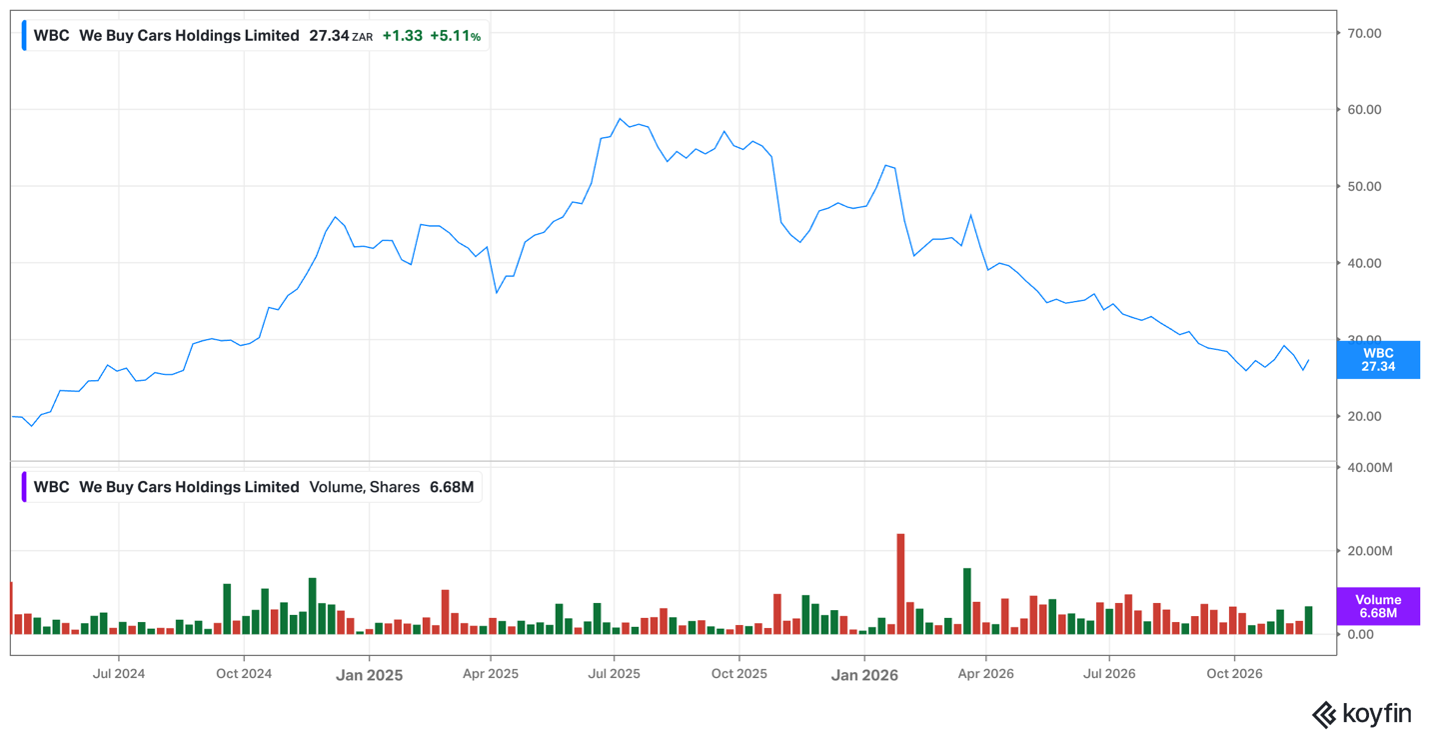
The company has had a mercurial existence on the JSE, trading at R60 per share before collapsing to around R25 per share after releasing poor results this week. It’s been quite the round trip:
Some Investors were sucked into this stock at high levels, but there were warning signs:
- WBC has now been sold twice: first to TC, and then via a listing to the public. Why were the brothers so determined to sell such a big portion of their stake?
- In January of this year, they sold most of their remaining stake to buy – wait for it – property! If your business has great growth prospects, why would you swap it for a depreciating asset?
- WBC has always portrayed itself as a “data-driven” business. There was no sign of their data-analysis ability in the latest results. To me, it seemed like someone had simply taken their eye off the ball.
- Finally, both brothers announced their retirement from executive duty in a bland letter to shareholders accompanying the poor set of results.
One analyst pointed out that if one annualises WBC’s second half result, it’s on a P/E of 20. So, not cheap yet.
My take: The phrase “don’t do what I say, do what I do” has never been more apt than in the WBC case. Two things must happen before this stock becomes investable: the valuation must normalise, and new management must prove their mettle. Until then, there are better alternatives.
4. And now for something completely different
RECM has spun out a new fund management business. Before starting Maxia Capital Management, Arno Dames was an analyst at RECM. Maxia launched with one fund, the Maxia Value Fund. The fund is a Mauritian-domiciled expert fund focused on global deep-value investing.
By deep value, I mean really, really deep. If you look at the fund’s holdings, I would be surprised if you had heard of more than a few of them.
Arno is the type of guy who analyses footnotes and rebuilds financial statements to reflect the world as it is, not as IFRS wants us to see it. He invests only when he understands the exact timing and size of the cash flows that accrue to the business’s owners, and he does so with a wider-than-normal margin of safety.
When it comes to portfolio construction, Arno paints well outside the lines of conventional closet-indexing “active” management.
If this piques your interest, as it does mine, you can learn more at https://maxiacapital.com/. You can also follow him on X, @Maxia Capital. It will make your feed much more interesting.
If you like what you see, email Arno directly for the pitch deck at info@maxiacapital.com.
In The Cockroach
This week, some trades were executed for both funds – the local fund (MWI Worldwide Flexible Fund*) and its offshore version (RECM Worldwide Flexible Fund) – specifically in the hard-asset portion of the funds.
CMSG was bought for both funds and Valterra Platinum was sold in the local fund. In effect, platinum equity exposure is being swapped for Bitcoin exposure in the local fund’s “hard asset” portion.
I was always uncomfortable owning mining equity in this part of the portfolio, but I was “forced” to do so because local CIS rules don’t allow funds to hold more than 10% in physical precious metals. Since the fund already held 10% in a gold ETF, I had to buy equity to gain exposure to platinum.
But now I have found this wonderful little company called Consensus Mining and Seigniorage (CMSG), an investment holding company with $60mn in cash and $3mn worth of computing equipment, which it uses to mine Bitcoin, Litecoin, and others.
It uses interest on cash and sales of Dogecoin mined alongside Litecoin to defray the costs of depreciating mining rigs (i.e., computing equipment) over time. This means the company makes a small profit from mining and can keep all the Bitcoin and Litecoin it mines – the very definition of seigniorage.
This differs from crypto ETFs, which must sell coins to pay management fees, and from most crypto mining companies, which sell most of their mining proceeds to cover capital costs.
CMSG trades at a discount to the cash on its balance sheet, so you get the (increasing number of) coins for free.
This is what the fund’s ‘hard asset’ allocation looks like now:
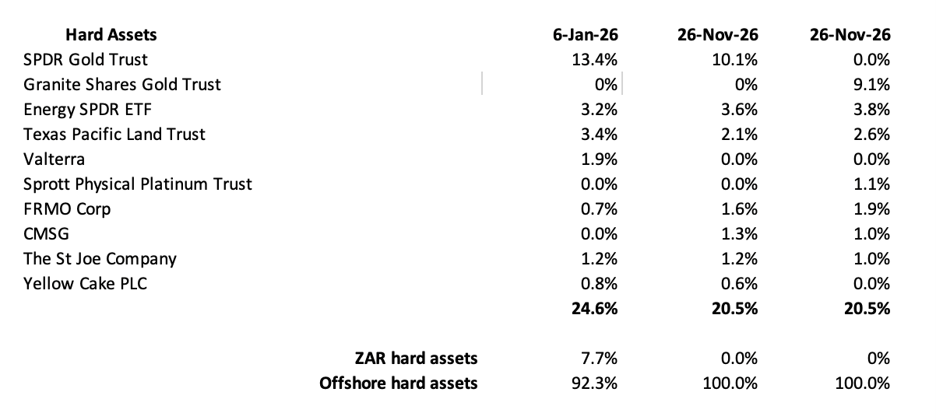
Over the last week, CMSG was added to both funds, replacing Valterra in the local fund. This hard asset portion of the fund has performed particularly poorly recently, especially the gold holding. It’s nearing time to rebalance back up to a weight of 25% for the category.
* I manage the fund on behalf of Merchant West Investments (Pty) Ltd (FSP 44508)
In The Media
1. The best music of 2007
In 2007, I broke a promise to myself never to invest in residential property. I bought a house. Not just any house – a house in a secure, gated estate in Knysna, a wonderful part of the world. I had been going to Knysna since 2000 to run the Oyster Festival half marathon, and I loved it. Some of my friends also had places there.
This house has turned out to be a cache of great memories, of good times with family and friends. It’s also turned out to be a disaster in investment terms. 19 years later, it’s worth less than three times what I paid for it. Conveniently ignoring the cost of two renovations (one major, one minor), all maintenance costs, and all rates, taxes, and levies (because that’s how we all do the sums on our properties), I calculate a return of 5.1% p.a.
It’s a shocker.
And this is a good property, in a great estate. Admittedly, the dysfunctional and corrupt municipality has reduced the town’s attractiveness to tourists and residents alike, impacting property values. But that’s the story of most of South Africa.
My money would have been much better off in the bank. Or, if I go to the trouble of doing a proper calculation and include all the costs, my money would likely have been better off under the mattress.
Of course, it’s not all about money. As a family, we have the memories and experiences the place has provided. But it’s also true to say that if we didn’t have that house, we would have had other experiences and memories – maybe even just as good! Or even better?
2007 was a great year for music but a bad year for investing. So, when I listen to the music of the year, it reminds me of one of my top three investment mistakes. I guess it’s appropriate that the Parlotones’ “Giant Mistake” is on my list of top 20 songs for the year.
Here are my top 10 albums of the year on Apple Music and Spotify. The highlight for me? Radiohead’s In Rainbows – no “hit” songs, but an album full of beautiful music. Personally, I think it was the best album of their career – including OK Computer. Here’s an idea: listen to The Bends, OK Computer, Kid A, and In Rainbows in that order. You’ll experience the band’s extraordinary musical evolution.
Here are my picks for the top 20 songs of the year, in descending order, on Apple Music and on Spotify. Remember Bon Iver’s “Skinny Love”? What a song!
And here’s the long list of good songs from the year, only on Apple Music.
Enjoy! I hope you find something you like.
2. Book review: Boom Times for The End of The World by Scott Timber
The first book I read this year was Music by Ted Gioia, which was interesting but dense. In this book, Gioia wrote an introduction that reads much more easily than his own book.
On the other hand, this book is an anthology of wonderfully written articles by Scott Timber.
Timber was an award-winning writer for the LA Times. His subject matter was culture
– music, movies, writing, art. Everything that Los Angeles stands for. His writing is engaging and takes you deep into the world of the person or cultural scene he chooses to cover.
The book opens with a 1999 piece on the photographer Bill Claxton, who famously documented the West Coast jazz scene. He delighted in pointing out that “even the junkies were eating health food.” He photographed Charlie Parker, Chet Baker, Ornette Coleman, etc. But the story is actually about the decline of West Coast jazz, which sets the stage for the rest of the book.
The articles are in chronological order, and his growing disappointment with the slow-motion cultural crash of Los Angeles and America becomes ever more evident as the chapters and articles roll by. He documents the increasing challenges faced by the creative class as algorithms supersede journalists as the arbiters of cool. The thing is, there’s nothing cool about an algorithm’s taste.
In the second-to-last chapter, Timber outlines “How Music has Responded to a Decade of Economic Inequality.” In short: not well. He points out the irony that popular music doesn’t really reflect most Americans’ lived experience. Popular culture has become a “rich kids’ project” and has thus lost its relevance.
As the cultural world became increasingly flattened by algorithms and social media, Timber lost his job at the LA Times and became a freelancer. Work became harder to find, and he eventually died by suicide in 2019. Many might regard him as a victim, but in his introduction, Goioa describes how hard Timber fought before giving up.
I highly recommend this book to anyone who loves music, literature, and art. Despite the sad denouement, it offers hope that, at some point, we will circumvent the algorithm, turn off social media, and return to immersing ourselves in original creativity driven by artists who have something relevant to say.
If nothing else, there are many references to cultural touchpoints that will interest Boomers like me who lived through the creative richness of the 50 years leading up to 2020.
Finally, last weekend my son Nic and two of his friends completed the Mossel Bay Half Ironman. That’s a 1.9 kms ocean swim, 90km bike, and a 21km run. In 6 hours! Not bad for his first attempt. Especially getting through the swim!
Here’s the nervous trio on the morning of the race (from left to right: Simon Prior, Taylor Wyatt-Smith and Nic):

Nic, on the run:

And having a well-deserved beer after:

It’s a proper joy to see him take on these challenges. I believe that to truly live life to the fullest, one should do scary things from time to time. It makes mundane, routine days special in ways that are hard to imagine or anticipate.
That’s it for this week. Remember…if you decide to do a scary thing, you still need to be careful!
Piet Viljoen
RECM
26 November 2026