
Dear Fellow Investors and Friends,
Welcome to my newsletter, where I share my efforts to understand markets and the world around me.
I do appreciate you taking the time to read this. I love getting feedback; feel free to drop me a line. It’s great to start conversations.
Today is Thursday, November 19th, the 323rd day of the year. There are 42 days left in the year. We’re finally enjoying some proper summer weather here in Cape Town. One can almost start to feel a holiday vibe. But there’s still a bit of work to do before we can start kicking back.
On this day in November 2001, Enron filed its Form 10-Q with the SEC, disclosing that a credit-rating downgrade could accelerate repayment of approximately $690 million of debt. This followed an earlier announcement that it would restate its previous financial results. Less than two weeks later, Enron filed for bankruptcy.
Enron went from the most popular and widely owned stock in the market to bankruptcy in a short period. Opaque related-party transactions, off-balance-sheet debt and conflicts involving senior executives can conceal enormous economic risks.
The key problem? Poor governance.
The governance issues were hiding in plain sight, but while the share price was going up, they were completely ignored.
Fast-forward a quarter of a century… and yet again one of the most popular and widely held stocks faces governance issues. Over the past week, Jensen Huang singularly dominated the minds of the market commentariat. I am loath to add to the current wave of speculation about him or the company, as I don’t think anyone can make an argument that even approaches a solid investment case for or against Nvidia right now. And people with vested interests are spinning their side of the story, which is even more dangerous.
Let me state my position at the outset – I don’t own the stock. Most stocks that inordinately occupy the minds of both lay and professional investors turn out to be poor investments. The reason is simple: the extent to which a stock is top of mind, as evidenced in public spaces like WhatsApp groups, X, or other social media, is directly proportional to the level of ownership.
Overowned stocks generate more than their fair share of discussion. Overowned stocks are often pregnant with potential downside, as few marginal buyers are left to cushion the fall when the inevitable bad news arrives.
And which company has never faced any bad news?
In good businesses that are not overowned, bad news tends to attract new buyers. In overowned stocks – regardless of the quality of the business – there are few new buyers vs. many potential sellers.
Rather than bore you with a rehash of the entire drama, I can refer you to Derek Thompson, who offers a clear account of the Nvidia affair, along with potential winners and losers. A word of warning: nothing is certain at this stage.
Instead, I want to focus on the dog that didn’t bark – governance. It’s that acronym we like to pay lip service to when speaking to our gatekeepers. No, not the CYA acronym so beloved of the actuarial consultants and DFMs, but the ESG one.
Except, of course, when a share price – like Nvidia’s – goes up by 500% over 5 years. While that’s happening, no one cares about that pesky G, let alone E and S. And the only way to CYA is to own it.
My view is that the Nvidia situation illustrates just how important governance is. But not governance in the box-ticking, la-la land of the King Code. Real governance, where the best interests of the business are the primary concern.
Let’s tackle the governance red flags at Nvidia one by one.
- Key man risk. At one point, Huang had 60 direct reports in a uniquely flat structure. Power was concentrated in his hands, creating an environment with no checks on him. The way Huang apparently treated his people, including actively seeking to have them fired when he felt they stood in his way, bore the marks of a man who had built a life where no one could stand up to him. And now that he is gone, what remains is a husk.
- Succession. One of a CEO’s key jobs is to build a corporate culture and groom successors who share that culture and vision for the business. Huang did not do this. There was no succession plan: Nvidia could move quickly and aggressively because it still behaved like a start-up. But it’s not – it’s a $4 trillion business with tentacles extending across the global economy. Pretending to be a start-up is reckless.
- Board composition. Nvidia’s board was a rubber stamp. Excluding Huang, half of the directors joined when Nvidia was still a video game chipmaker. No board member has significant national security experience. None of them is a current or former S&P 500 CEO. Nvidia’s board is underwhelming for a company of its size. Also, there was no chairperson.
In the end, none of these governance measures would have stopped Mr Huang from doing what he did. Outsized success often breeds outsized hubris, and many women are drawn to rich and powerful men. That’s the way of the world, whether we like it or not. Ask Jeff.
But recognising these red flags might have led investors to apply a higher discount to Nvidia’s valuation. As a result, they would have suffered smaller losses when the governance risks materialised. Good governance is like good administration or a good airline pilot – no one notices anything until something goes wrong.
And things have a nasty habit of going wrong, even in the world’s most valuable and respected companies.
Here’s your weekend homework: analyse the governance structures of SpaceX, OpenAI and Anthropic or any of the other popular stocks and incorporate your findings into your valuation analysis. It will be time well spent.
In The Markets
1. Flashing yellow lights
While we’re on the topic of governance, the South African market is a veritable hotbed of poor governance. Under the cover of that so-called code of good corporate governance, the King Code, governance in South Africa has deteriorated substantially.
The main culprit is the code’s insistence on defining independent directors as independent of the company, i.e. not being shareholders. So, directors are effectively appointed and paid by management, making them beholden to them.
My view – and this is a strong one, strongly held – is that independence should be defined as being independent of management, which is exactly the opposite of what the King Code demands.
What we have today are boards of directors who earn substantial rewards for sitting around and ticking boxes, not really caring about the company because they have no skin in the game. They may protest that this is not the case, that they are exercising judgment with due care and consideration for the well-being of the company, but then how do you explain:
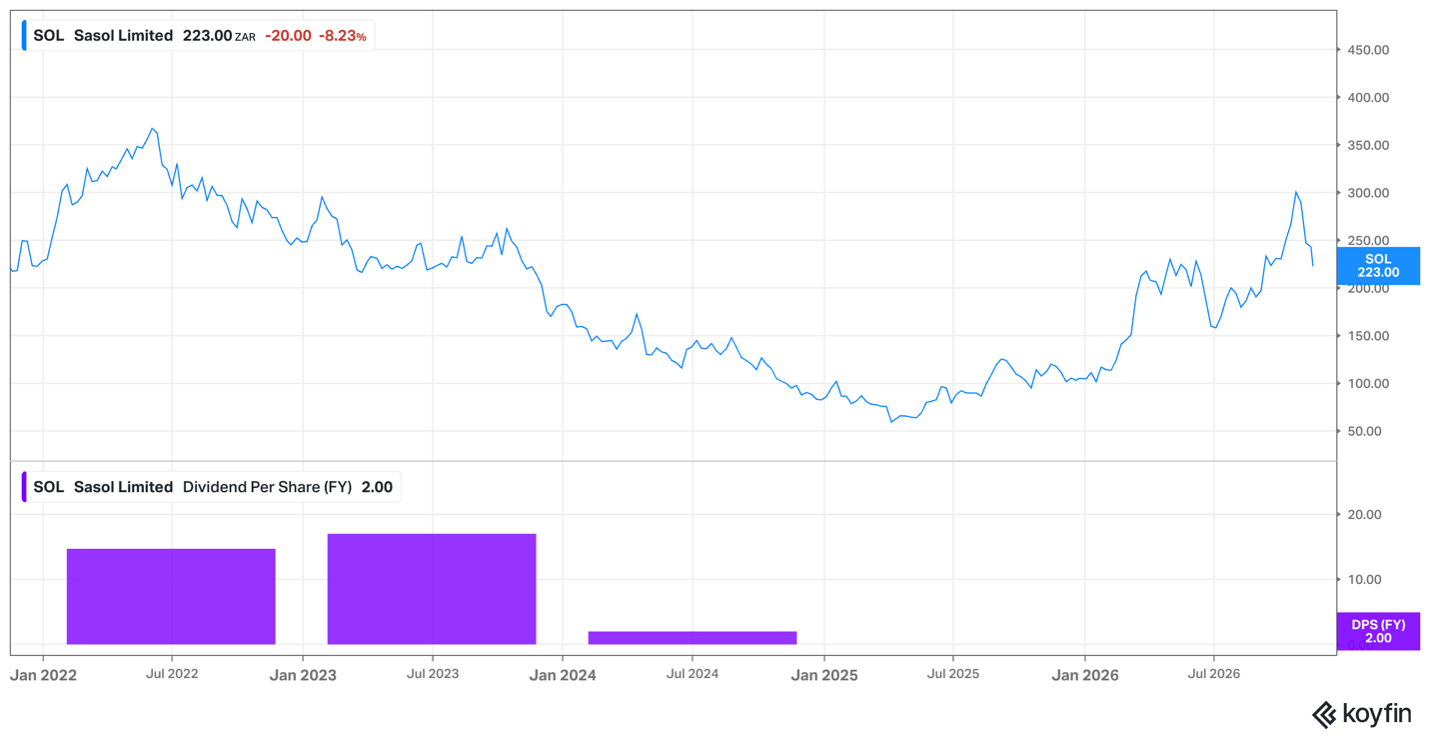
- The CEO of Sasol receiving a massive pay boost, while shareholders get nada. Sure, Mr Baloyi has done a good job, but the measure of how good the job has been done is the return to shareholders, of which there has been very little. No share price gains, and some small dividends quite a while ago:
- The CEO of Woolworths – or, to be more precise, the succession of CEOs at Woolworths – has presided over one of the most value-destructive corporate strategies in living memory. How is it possible that the owner of one of the most successful food retailing businesses in South Africa’s history has a share price that looks like this:
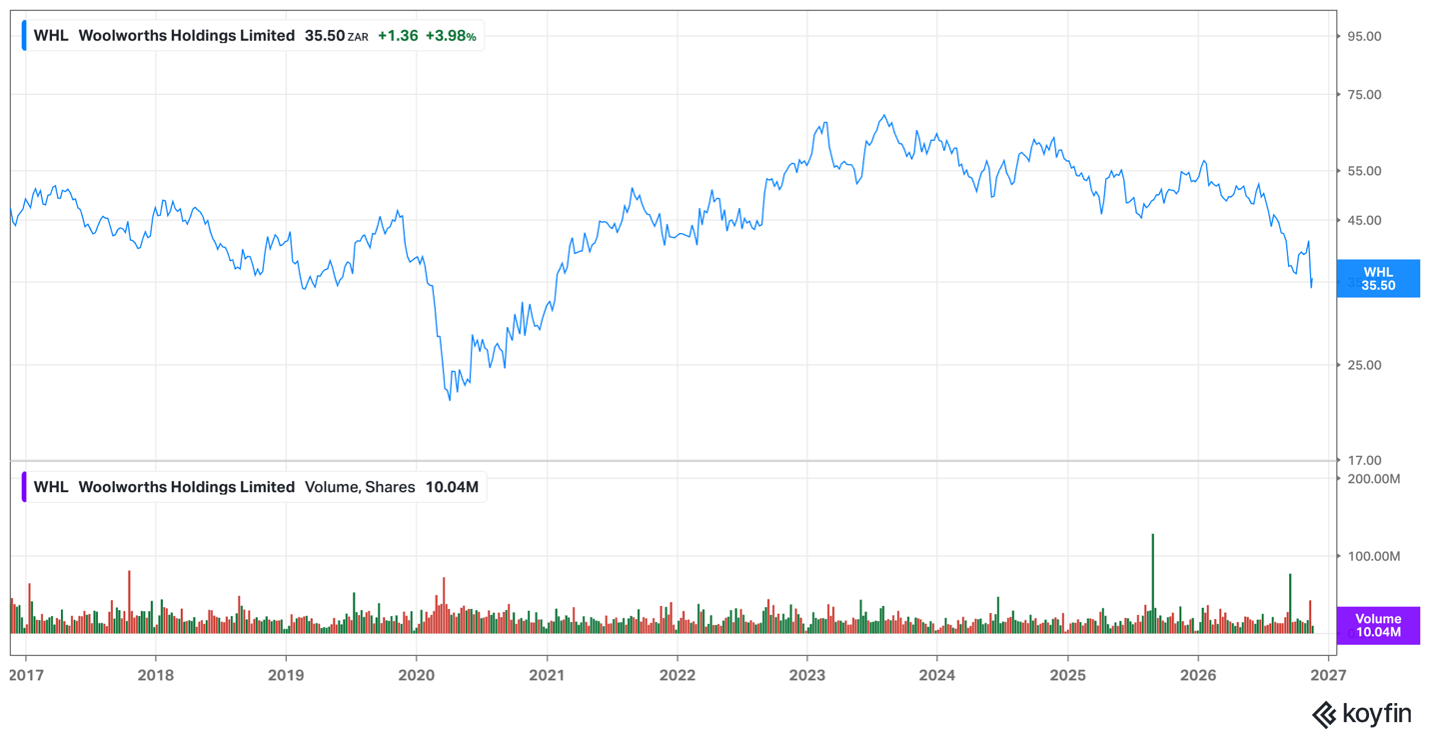
Down 20% over ten years!
An independent, objective board would be ashamed of this performance. But no, this board rewards the successive value-destroying CEOs with ever higher payouts. CEO pay has grown by 23% per annum over the period of the chart above.
- Then we have the classic case of Spar, where the board – independent according to the King Code – was rife with conflicts of interest. Many of the board members sat on so many boards that there was no way they could govern any of them properly. But these were ignored until the share price collapsed in 2026. Of course, Spar was given a clean bill of health by the King Code.
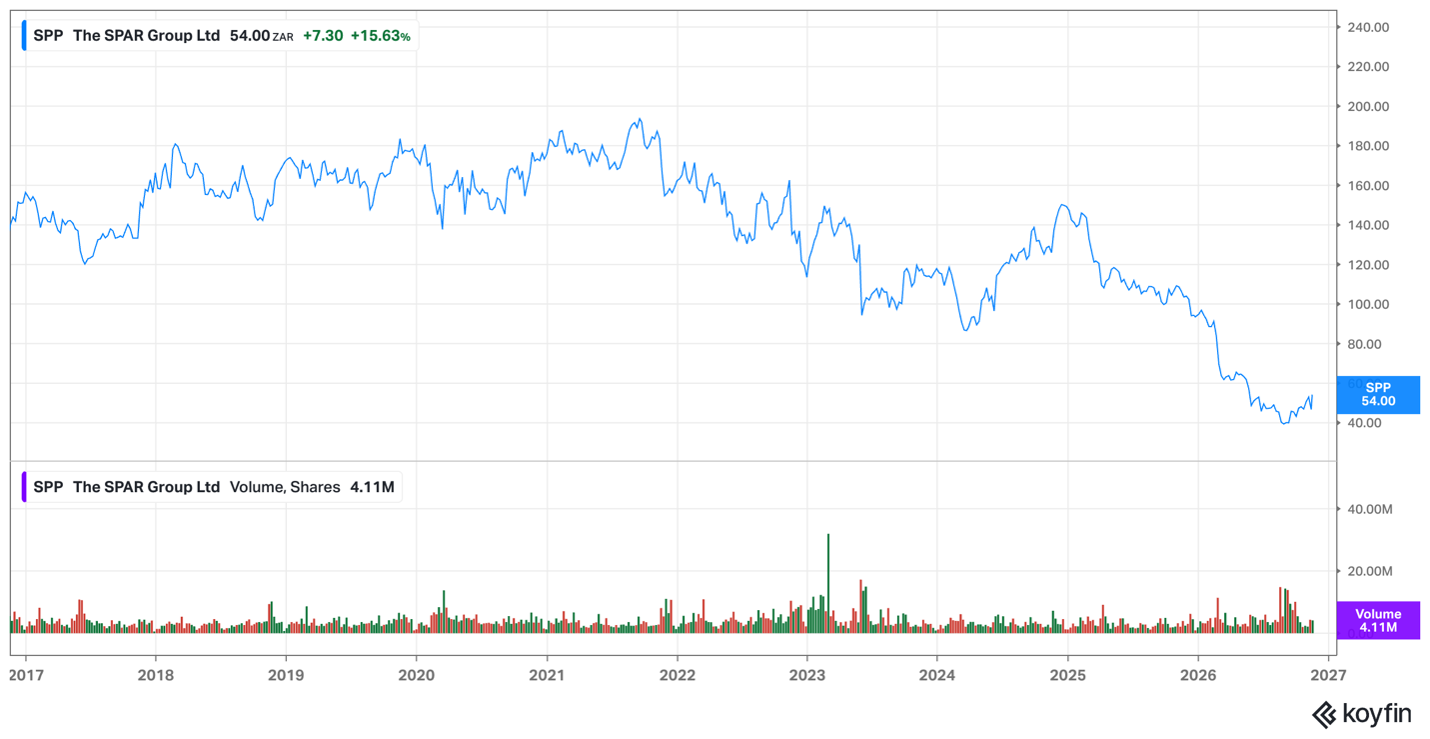
My take: These are just a couple of examples of poor governance; there are many more. In all three cases, the share prices were flashing yellow warning lights well before any of the fawning analysts or captured board members knew anything. People and companies obfuscate; share prices tell the truth.
2. What goes around, comes around
Texas Pacific Land (TPL) was born in a great infrastructure boom – and bust – of the 19th century. In the 1870s, railroads were the data centres of their day: transformational technology, limitless growth projections, government subsidies, and investors falling over themselves to fund the next big thing.
The Texas & Pacific Railway was granted millions of acres to build a transcontinental railway. Unfortunately, the railway was never completed, and by 1888 the company was bankrupt. Its creditors were left holding the bag – or, more precisely, 3.5 million acres of seemingly worthless Texas scrubland.
Over the ensuing century, TPL sold blocks of its land and used the proceeds to buy back shares trading at a discount to the land’s value. This created tremendous value, and today TPL shareholders still own almost a million acres of land in West Texas.
But then a revolutionary new technology was developed: horizontal drilling (fracking). This technology unlocked one of the world’s richest oil reserves, the Permian Basin, which lies beneath TPL’s land.
For several years, TPL earned royalties on oil and gas produced from its land. It didn’t need to spend any money on exploration, drilling or extraction – it left all the hard work to the oil companies. It merely charged them a royalty on production for the right to drill on its land.
As a result, over the past 19 years, TPL has grown free cash flow per share by 23% p.a.:
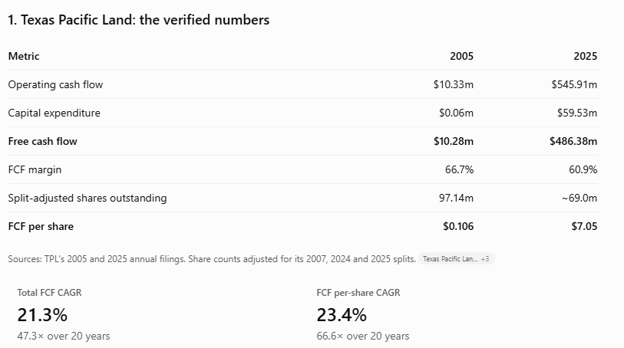
Only two companies in the USA have ever done better: Nvidia and Netflix.
What distinguishes TPL is that it achieved this by monetising land and royalty rights held for generations, rather than continually developing capital-intensive, transformational company products.
But that’s not all, folks!
A few years ago, TPL started a new, adjacent business: instead of disposing of produced water, it began taking contaminated water from fracking, treating it, and converting it into reusable freshwater. They have built a demonstration plant, and if successful, they will be paid twice: once for removing the contaminated water, and again for selling treated freshwater.
And now it’s developing a 5th business – providing land to companies that want to build data centres. The current weakness in TPL’s share price is due to the recent elections in the USA, where data centres were a major issue. People generally don’t want data centres in their area, as they tend to push up electricity prices, take up valuable land, make a lot of noise and use large amounts of water. The election of an anti-data centre Democrat in the state of Texas came as a shock to TPL shareholders:
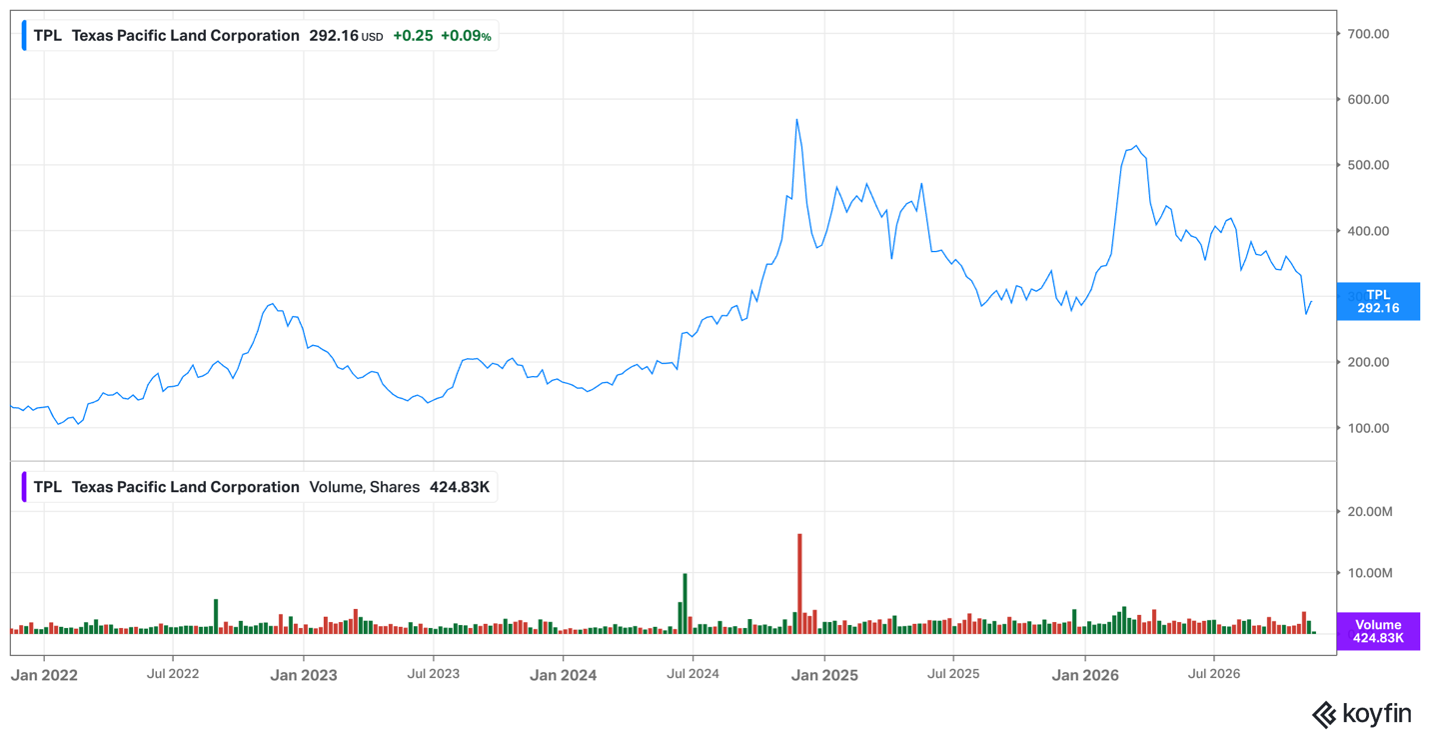
My view is that the election result strengthens TPL’s hand. It generates its own energy, so there is no need to connect to the grid and compete with households for power. It produces and treats its own water, so it doesn’t have to compete with households for scarce water. Finally, its land is largely uninhabited, as it’s way out in the West Texas desert.
But hey, who knows how this will pan out?
The key point is that TPL’s main asset – land, mineral and water rights – appreciates over time, from simple grazing leases to mineral (and water) royalties, commercial and residential real estate development, and now data centres. This progression up the value chain naturally increases the intrinsic value of TPL’s land asset. Other people do the work and put in the capital; TPL takes something off the top.
My take: If one assumes the Luddites lose the argument – as they have done through the centuries – the current infrastructure boom could make TPL an even bigger winner. All shareholders need is the scarcest of assets: patience.
3. Feeding the ducks when they quack
Vukile is a large, well-managed South African REIT that also owns properties in Europe. In fact, it owns more property in Europe than in South Africa. Vukile could be that rare unicorn – a listed South African business that has successfully diversified offshore.
The problem is that it is currently priced for perfection:
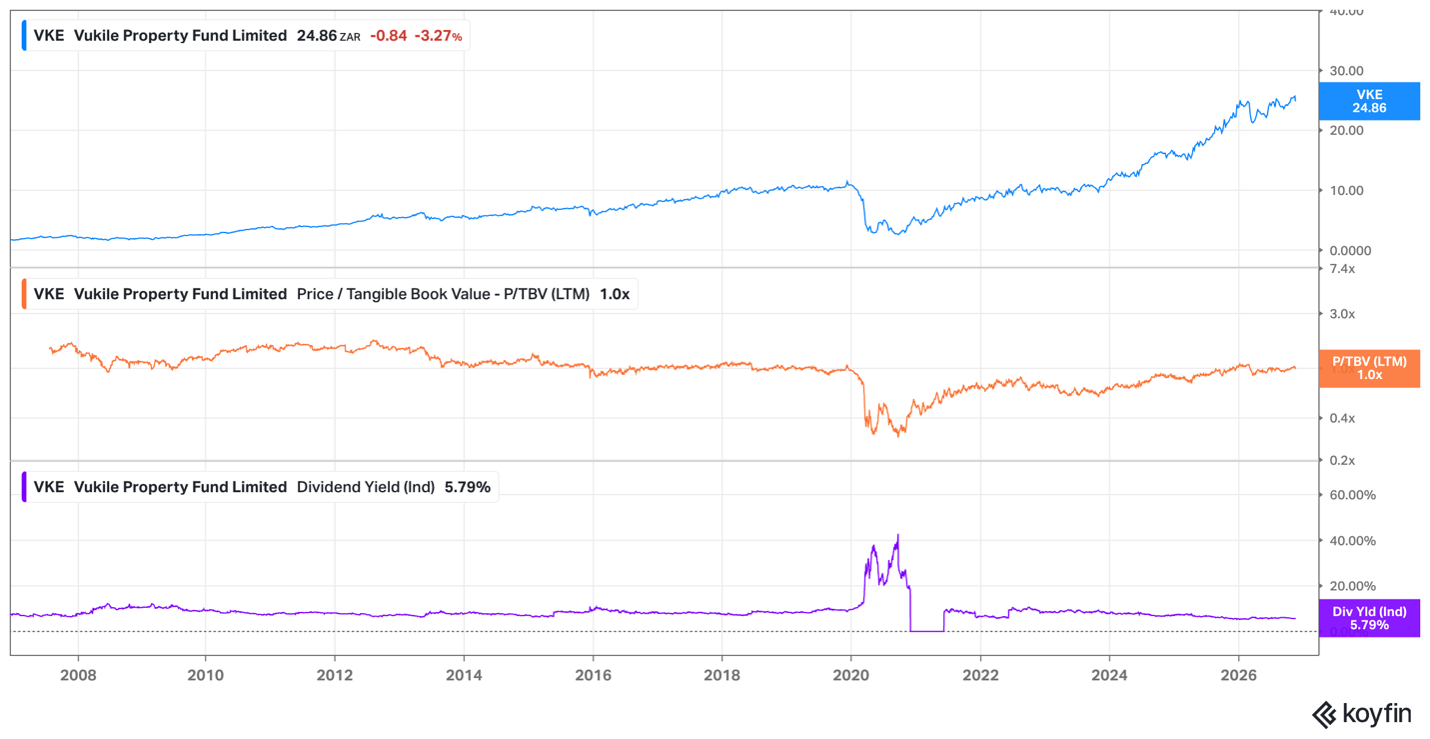
On a yield of 5.9%, almost 4% lower than government bond yields, the market is pricing in a lot of growth in distributable income.
Growth which is hard to get in the property market, given poor economic vitality in both Europe and South Africa, plus the headwinds of higher interest rates.
Also, the market is pricing the stock at book value, so there is no discount for the lack of liquidity in the underlying assets or for their inevitable deterioration over time. Properties require a lot of maintenance to keep them in good nick. Homeowners know this!
So, what would a smart operator do in this situation? Fortunately for Vukile’s shareholders, the company is run by smart operators who are issuing as much stock at these prices as possible.
Of the top 5 capital raisings in the property sector in South Africa over the past couple of years, Vukile holds positions one, two and three:
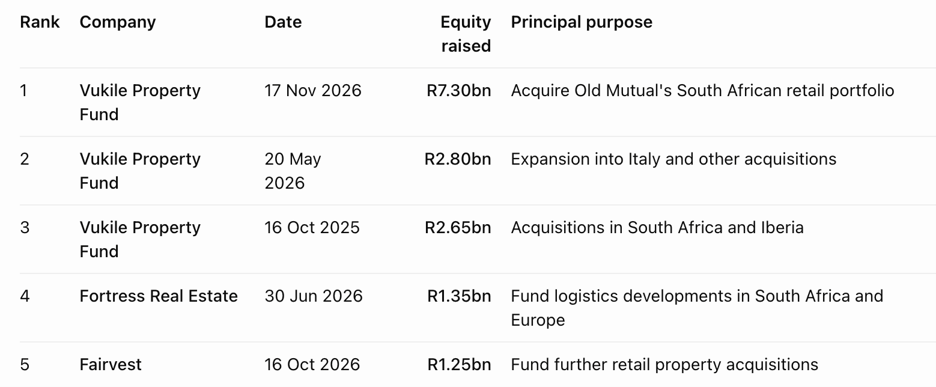
My take: The smart money is selling, hand over fist. What should you do? The property ducks are quacking; it’s time to feed them.
4. Energy is life
The recent election results in the USA were driven by anti-war sentiment. Despite its military superiority, the USA has once again gotten ensnared in a conflict it can’t win.
Why is it struggling so much in Iran, a dirt-poor, sanctions-ridden country run by ignorant religious leaders stuck in the Middle Ages? Or so the popular press would have you believe.
But here’s the reality: this single chart explains why it’s so difficult (impossible?) to knock over Iran:
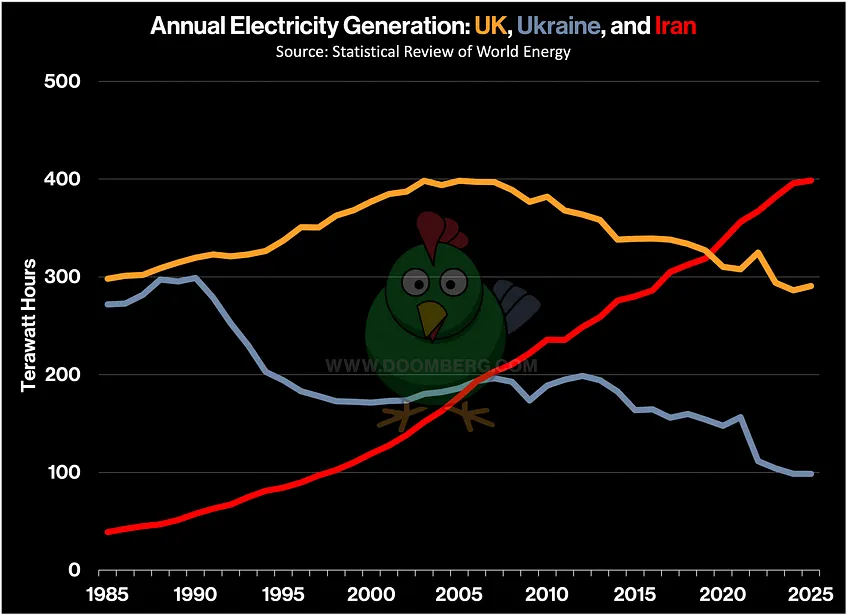
This chart is courtesy of my favourite analysts, Doomberg. Their theory is that everything is downstream of energy – the more access to energy a person or a country has, the stronger they are.
If Russia can’t dominate an energy-poor country on its doorstep, the USA will certainly struggle against an energy-rich country in a different hemisphere. But what’s even more shocking is the position the UK finds itself in because of its ridiculously stupid energy policies.
My take: The one with the most energy wins. Going green might make you feel good, but that only lasts until you get cold and hungry, or until someone with more energy takes you over.
In The Cockroach
No new trades this week, as usual. Given the current market weakness, it’s probably useful to discuss the role of cash in the portfolios. Let’s start with the current allocation:
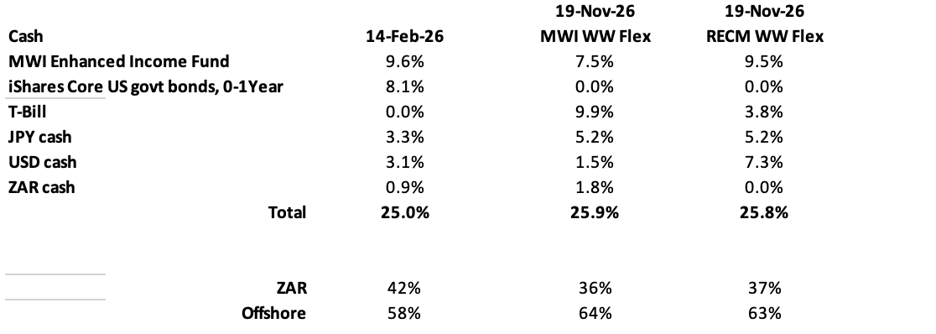
There are two differences between the funds. The offshore fund (RECM Worldwide Flexible Fund – RECM WW Flex) uses USD to manage liquidity in and out of the fund and does not need to hold ZAR. The local fund (MWI Worldwide Flexible Fund* – MWI WW Flex) must hold some ZAR cash for this purpose. The offshore fund is also still in the process of buying more T-Bills in a laddering process, for which it will use the excess USD cash.
The fund always holds 25% (currently slightly overweight, due to weak markets in its other assets) of its value in cash investments. This has two purposes.
The first is to act as a “counterweight”, keeping the fund’s volatility low. One of the principles behind the fund’s management is to avoid scaring investors. Big price drawdowns make us fearful, and steep increases make us greedy; that’s human nature. Such emotions lead to poor investment decisions. So, to the extent we can keep things on an even keel, we can protect ourselves against ourselves. This is what the fund’s history looks like in terms of drawdowns, relative to equities and bonds:
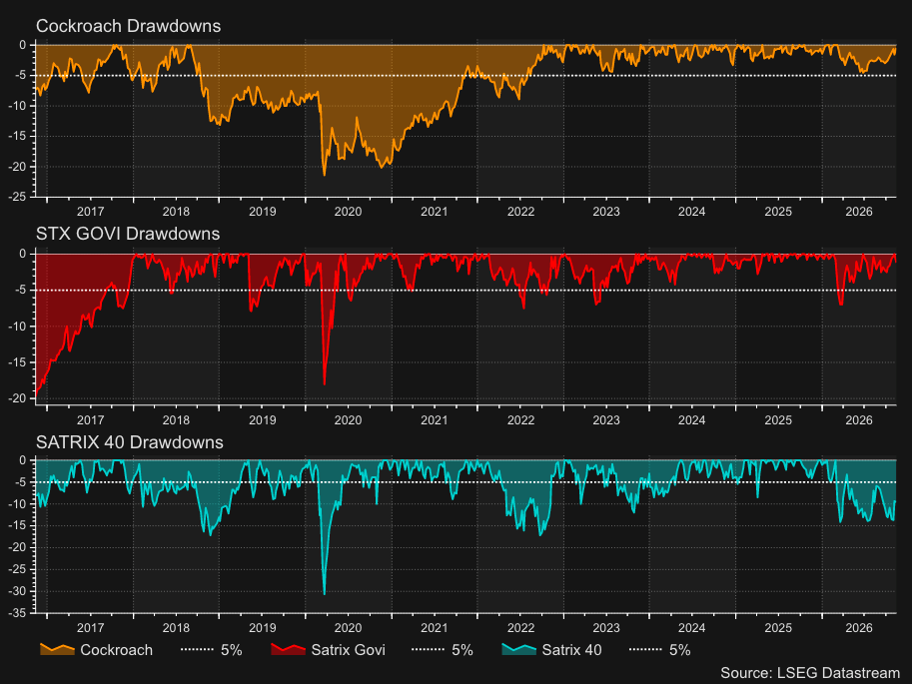
I started managing the fund with the cockroach philosophy in August 2020. It’s clear how the volatility has declined to much lower levels than either the bond market (in red) or the equity market (in green). Broad diversification and the 25% cash holding enabled this outcome.
The second, and another important reason to hold cash, is to give the fund firepower when asset prices fall sharply. In such an environment, other parts of the portfolio will decline to levels significantly below their 25% allocation, while cash will rise to levels significantly above its standard 25% weight. This forces the fund to buy low, even though doing so at the time will seem stupid, foolish and difficult. The cockroach is consciously designed to override our silly emotions.
* I manage the fund on behalf of Merchant West Investments (Pty) Ltd (FSP 44508)
In The Media
1. You’ve been propagandised re: climate change
This will probably not be a popular take, but I think it’s a well-made argument. In his Substack “Hot Takes”, Adam Singer points out that, contrary to common belief, the world isn’t ending due to climate change. Fearmongers like the degrowthers are using it as a tool to control us. Even famous teen puppet climate activist Greta Thunberg has lately found other fish to fry in her populist pan. At least she’s consistent – she still doesn’t understand any of the issues at hand.
This chart says it all:
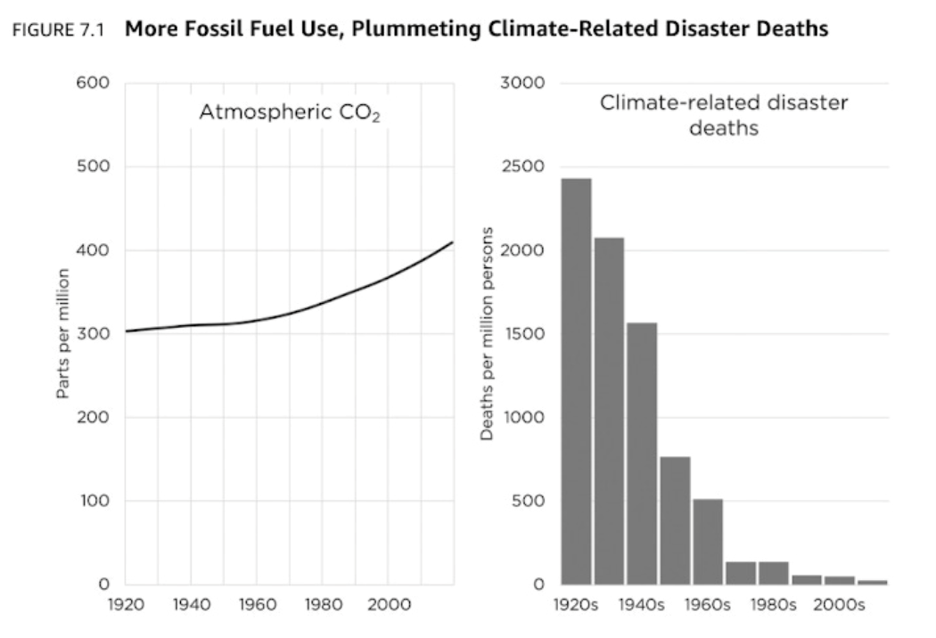
Source: Alex Epstein, Fossil Future (2022), Figure 7.1. Underlying data: Scripps Institution of Oceanography, EM-DAT, World Bank and Maddison Project Database.
Of course, there is a counterargument, which you can read here.
Regardless of which research you believe, the point stands. Humans are not dying out because of climate change. Neither will our children, nor their children, and so on. Humans adapt and thrive. Always have, always will.
As Singer says, “Go live your life, buy an EV, have more kids. The real issue here is people’s mental health, caused by consuming too much doom porn (which never comes true) or by letting meddling bureaucrats halt progress.”
2. The Boring Company
This is one of Elon Musk’s forgotten companies. But if you believe the guys at a16Z, it might start generating some headlines in the not-too-distant future. If nothing else, this article will give you insight into how Elon Musk thinks and approaches physical constraints. You might not like the man, but he’s a brilliant engineer, entrepreneur and thinker.
Last weekend, I rode the 3-day Wine-to-Whales MTB race with my friend, Siegfried Rossouw. There’s a saying in team-based MTB riding – one rider is the hammer, the other the nail.
I was not the hammer.
Despite Siegfried being kind enough to have brought only a very, very light hammer to the race, I’m still tired today.
Here are our before-and-after pics:


Yes, it’s a dirty business, this mountain bike malarkey. Dirty, but fun!
This weekend, my son Nic is attempting his first Ironman 70.3 in Mossel Bay. Amanda and I will most certainly be there to support him. Good luck, Nic!
That’s it for this week.
Whether you are out there riding, running, or swimming, or smart enough to laze around on the couch watching the Bokke this weekend, remember it pays to be careful!
Piet Viljoen
RECM
19 November 2026