
Dear Fellow Investors and Friends,
Welcome to my newsletter, where I share my efforts to understand markets and the world around me.
I do appreciate you taking the time to read this. I love getting feedback; feel free to drop me a line. It’s great to start conversations.
Today is Thursday, 24 September, the 260th day of the year. There are 105 days left in the year. On this day in 1985, the Plaza Accord began to reshape global currency markets as Japan’s markets reopened after the G5’s agreement to push the dollar lower.
Before the accord, the yen traded at around 240 to the US$. Eventually, it strengthened to 120 to the US$ – a gain of 50%! The massive trade surpluses Japan was producing at the time were just not palatable to the rest of the world. As they say, history never repeats, but it rhymes. Today, China is in a similar position. Could similar events unfold?
Who knows? In hindsight, investing is always simple. But the future is unknowable, so investing is never easy.
There are two kinds of investors.
One group carefully constructs a portfolio of assets to preserve and grow their wealth, regardless of future events.
The other group sees the stock market as a giant casino, where a big jackpot is always just around the corner. You just have to guess correctly every now and then. Like most casino-goers, this second group never seems to get ahead.
I guess the media drives this kind of behaviour; they see pictures of the traders with their Lambos in magazines, or the Wall Street suits in films, and say to themselves: “How hard can this possibly be? I’ll give it a go, too.”
But they miss the context:
- The rich “trader” is one of a very few. You don’t see the failed traders. Just like the lottery, you only hear about the couple of winners, not the many, many people who lose every week. Overall, playing the lottery is a losing proposition. So is gambling. So is trading.
- The Wall Street suit in the movies got there through a combination of obsessive focus, callous ruthlessness, and a sociopathic ability to navigate corporate politics. Ask yourself this: are you happy to spend time developing and living with those traits?
- Trying to “invest” yourself rich is a particularly hard way to get there. You have absolutely no edge over the highly well-funded gamblers, inveterate insider traders, obsessive-compulsive analysts and narcissistic portfolio managers who inhabit the market.
So, before you start trading for money, ask yourself these questions:
- How much time are you spending on your investment process? Your competition obsesses over it, spending all their waking hours developing a successful one.
- What is your actual investment process? Your competitors have a well-defined, replicable process developed over many years of trial and error.
- How rigorous is your process? Your competitors’ activities are meticulously measured and audited, and only those whose processes deliver a good investment outcome survive.
- What benchmark are you measuring yourself against? Do you even know how well or how badly you are performing? How do you distinguish between unlucky outcomes and poor process?
I could go on and on, but most traders can’t answer those questions sensibly.
Think about it – the market is a zero-sum game. If the sociopaths you are competing against are making a living out of it, it’s coming from someone’s pocket. That pocket is most likely the casual day trader who thinks the market is an easy place to get rich. The analogy with poker is clear – if you don’t know who the patsy at the table is, it’s most likely you.
But all is not lost. You do have some advantages over the pros when it comes to investing.
- You are not part of the “institutional imperative”. You don’t need to do irrational things to keep your job.
- You aren’t measured over short, arbitrary periods. You can choose a sensible benchmark and focus only on your long-term performance.
- You don’t have clients who can force you to liquidate your positions at the most inopportune moments.
- You have no “mandate” that compels you to own certain assets or to avoid owning others.
- You can control costs.
From this, it follows that it’s best to index the bulk of your money. Most professionals can’t beat the index, so if you’re indexing, you are ahead of the game. Outsource a small portion to areas with clearly defined market inefficiencies. Take a small portion and invest it your way. Have fun with it. Measure your outcomes against your benchmark over reasonably long time periods. If you find your process is working, incrementally allocate away from the index to your process.
Another very simple way to get ahead is to trade infrequently. The fewer trades you do, the lower the chance of getting things wrong, and you enjoy much lower frictional costs.
Finally, the sensible way to build your wealth is to be the best in your job and to save scrupulously. Your relationship to investing should be like that of a caretaker to a building. Maintenance and repairs, not building a new building every month.
As I said – simple, but not easy.
In The Markets
1. Run, Forest, run!
Rembrandt Group (Remgro) is widely seen as South Africa’s pre-eminent investment holding company, with a history dating back to the 1960s. Unfortunately, it still seems stuck in the 20th century, unable to adapt to 21st-century realities. In the past, size and growth impressed the Stellenbosch crowd, and Remgro scored well on these metrics.
But in doing so, management has consistently neglected the key determinant of investment success: return on capital invested. This has directly resulted in an exceedingly poor investment track record.
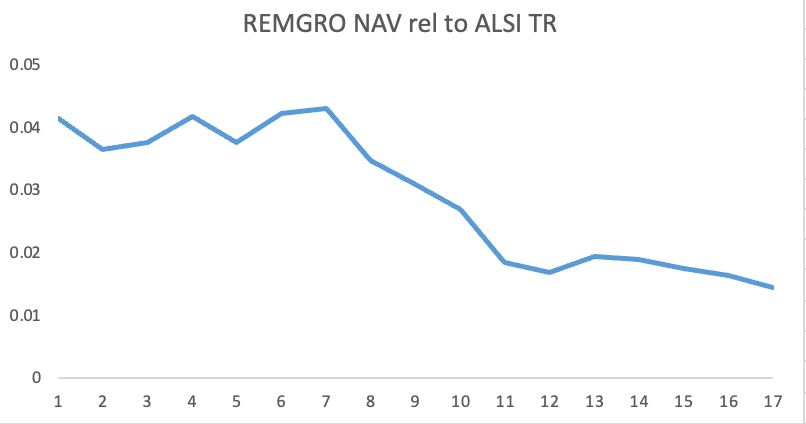
Since 2010, Remgro has grown its Intrinsic Net Asset Value (iNAV) by a mediocre 7% a year (including all the special dividends and unbundlings). Management has done marginally better than if it had kept its capital in a bank account, and is well behind the All-Share Index’s total return of 13% p.a.
In their results presentation this week, management seemed to blame COVID for some of their poor performance. So, I looked at the numbers post-2021.
In the five years since then, iNAV per share has grown by a much improved 12% p.a., but still substantially below the All-Share Index total return of 19% p.a.
Interestingly, the gap remains the same: Remgro consistently grows its iNAV by 6% to 7% p.a. less than the ALSI. That difference compounds into a big number over time, justifying the share price’s wide discount to iNAV.
The discount should be bigger. Remgro management seems to share this view; how else do you explain paying special dividends rather than share buybacks?
In the results presentation, there was again a lot of talk about revenue and EBITDA(!) growth. But no one mentioned how much capital was invested to generate this growth, and definitely nothing about the return achieved on that capital.
Management is stuck in the last century, playing to the Stellenbosch gallery by consistently overpaying for trophy assets. Capital allocation remains the Achilles’ heel of this business.
Here is how badly they have performed over the past 17 years (with 1 being 2010 and 17 being the latest data, including dividends and unbundlings). If this were a fund manager’s returns, they would have been fired a long time ago:
Here’s a chart of the Remgro share price relative to the All Share Index, down by over 40% over the past decade:
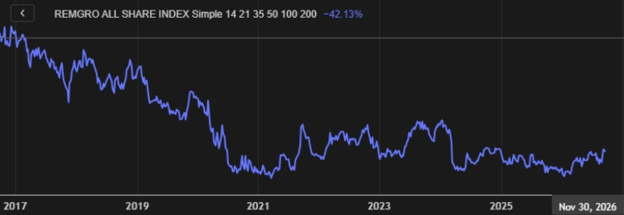
My take: I see nothing in these results that will change Remgro’s trajectory. Management still doesn’t understand their job – or, if they do, they are not communicating it properly. There is only one thing to do here, and that is to run, Forest, run!
2. A silver lining
In July, Andy Burnham arrived in 10 Downing Street. He is also the 7th person to occupy that address since David Cameron 10 years ago. If it weren’t Britain, you would think it was some banana republic. It’s no wonder British assets are trading at a discount:
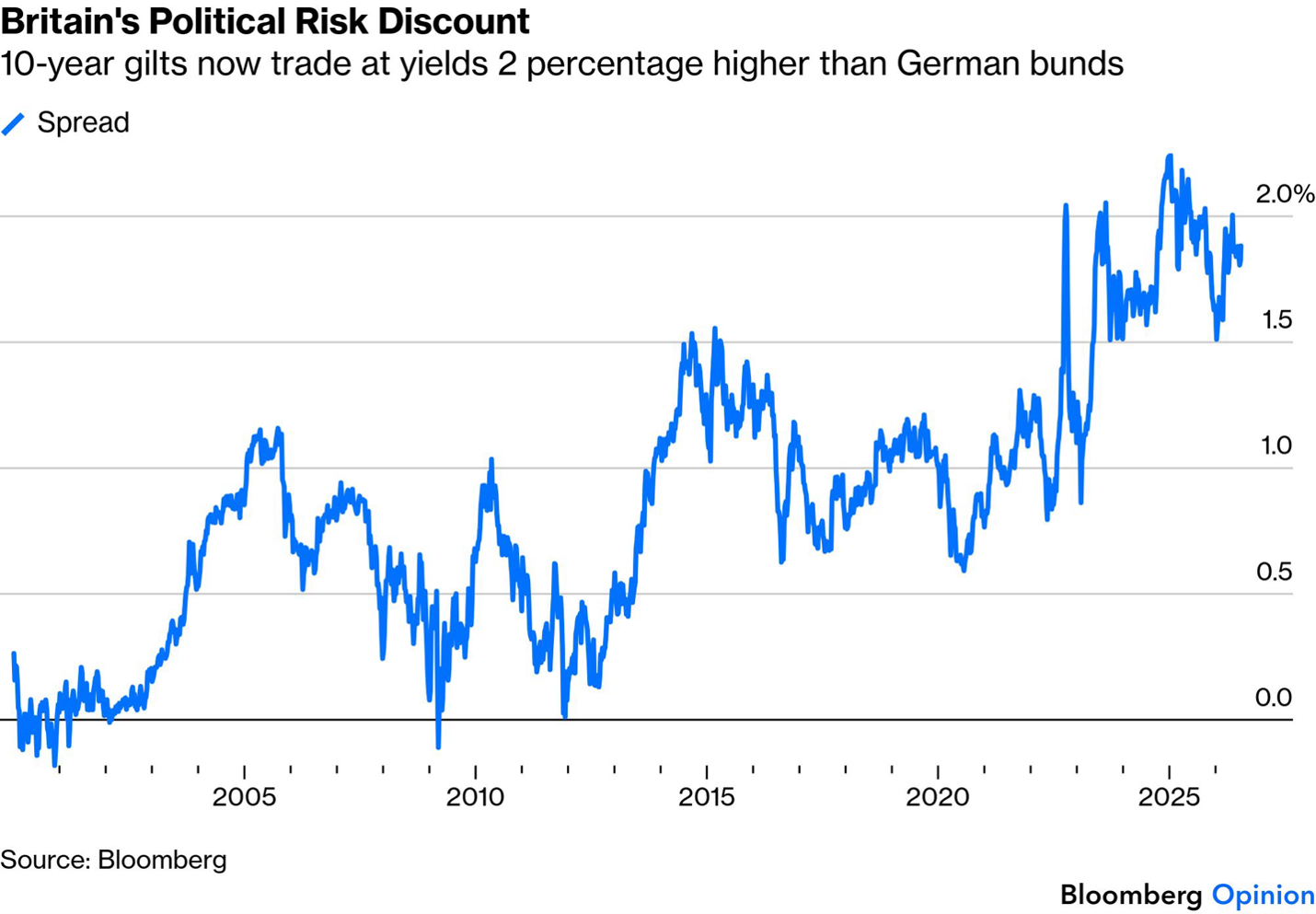
Assets at a discount normally attract judicious buyers, and it’s happening in the UK:
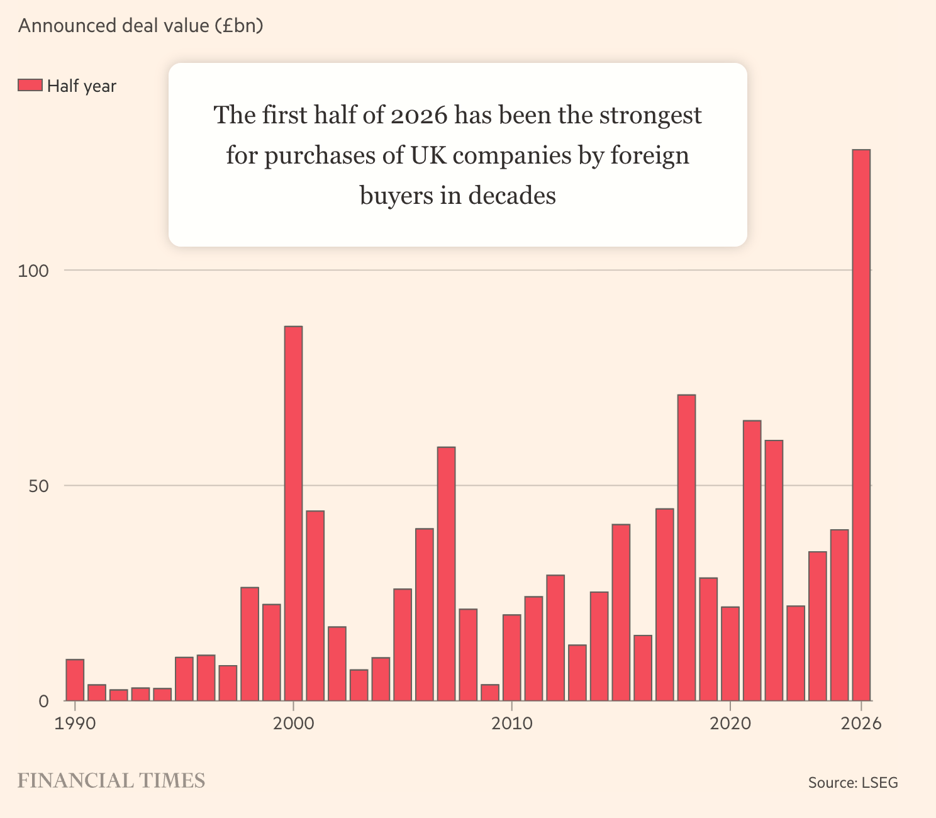
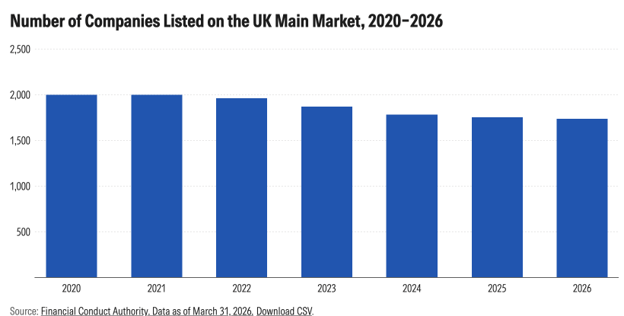
A recent example is the Swiss engineering group ABB paying a 73% premium for British firm Rotork, which sells valves and other industrial kit. A boring business, but a highly profitable one. This and other buyouts are reducing the number of listed companies on the UK stock exchange:
The good news is that here on the JSE, we have access to a business which is doing just this – buying cheap British companies. Argent recently announced the purchase of the Ramsden Group. Ramsden specialises in manufacturing new and reconditioned steel drums, supplying wooden pallets, and reconditioning Intermediate Bulk Containers under its own waste management licenses.
This is definitely not a Stellenbosch-type trophy asset, but if it is like any of Argent’s previous acquisitions, it will add tremendous value. From a standing start, Argent has acquired 10 businesses in the UK over the past 10 years. Over that time, its return on invested capital has improved from 6% to 13%. Its acquisitions all generate good cash flows, and Argent has used that cash to buy back shares. The number of shares in issue has reduced by almost 50% over the past 10 years, from 97 million to only 53 million. This has created tremendous per-share value for shareholders.
This chart shows Argent’s performance relative to the All-Share Index over the past 10 years:
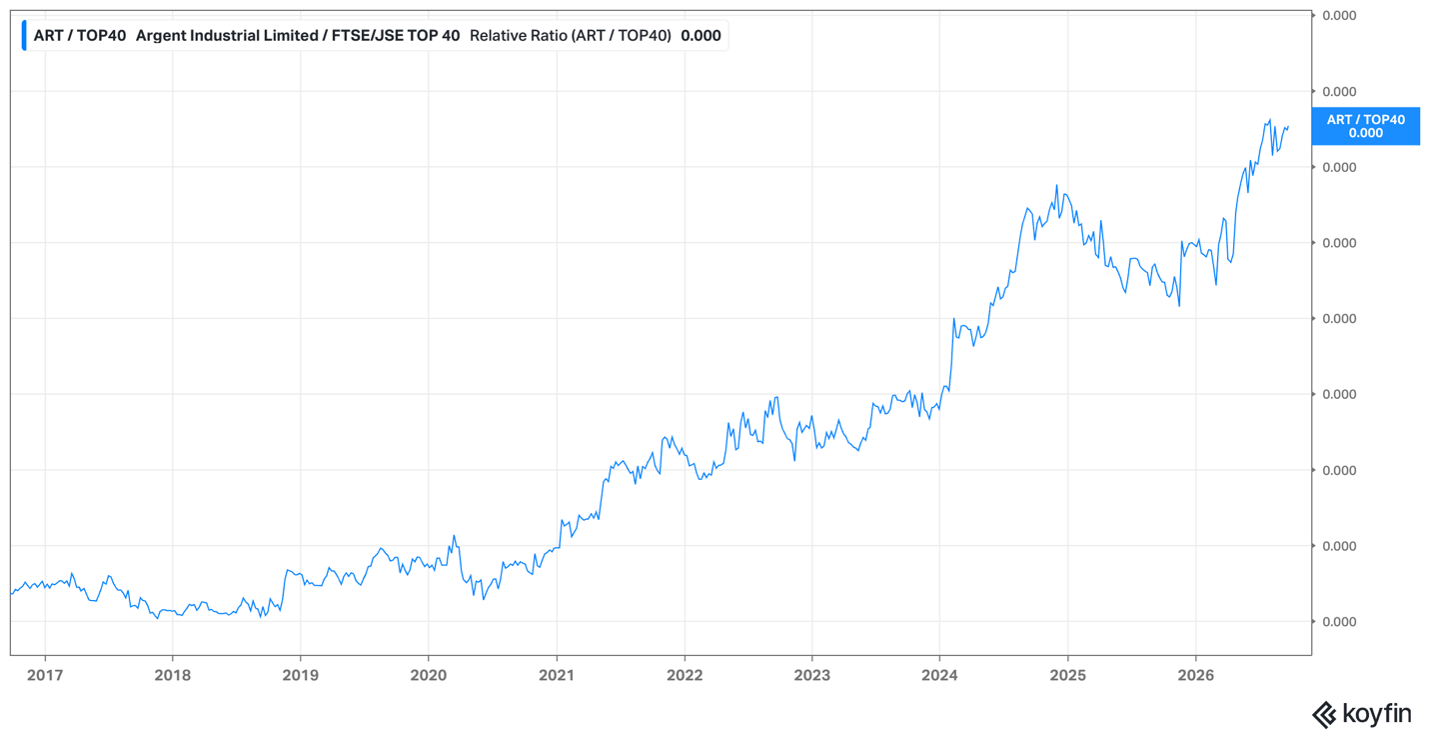
That chart is almost a mirror image of the Remgro chart!
Despite a long track record of sensible capital allocation, Argent is languishing on a P/E (excluding cash) of less than 4. It is one of the MWI Value fund’s top holdings. No other unit trust holds a larger proportion of Argent than the Value fund. Only 6 funds hold more than 1%! By way of contrast, 126 funds hold more than 1% of perennial underperformer Remgro. No wonder the average fund struggles to outperform the index.
My take: Argent is a silver lining on the JSE (pun intended). Despite its long-term outperformance, it remains undervalued.
3. BYD
In its recent earnings call, the Chinese EV maker reported that its overseas sales topped its domestic sales for the first time in company history. It’s a sign of both booming global demand and a shifting Chinese market. Either way, Western carmakers could be in trouble.
BYD’s overseas sales in the first half of the year rose 34% to $27 billion, accounting for 53% of total sales. Meanwhile, Chinese revenue dipped 31%, battered by the increasingly brutal dynamics of the domestic market. In a double whammy, fierce price competition means selling cars at home is a razor-thin-margin business.
Western carmakers feel the pain far more acutely. In July, Mercedes said a 30% decline in China sales offset growth in all other markets; in August, GM discontinued its Chevrolet brand in China after sales collapsed by 99% from its 2014 peak.
Meanwhile, BYD’s global success, particularly in developing markets, is eroding long-standing international strongholds of legacy brands. For instance, BYD outsold Toyota (17,354 bookings to 15,750) at this year’s Bangkok International Motor Show, despite Toyota’s long-standing Thai dominance; in Brazil, BYD is now neck and neck with Volkswagen, which has been assembling cars there since the 1950s.
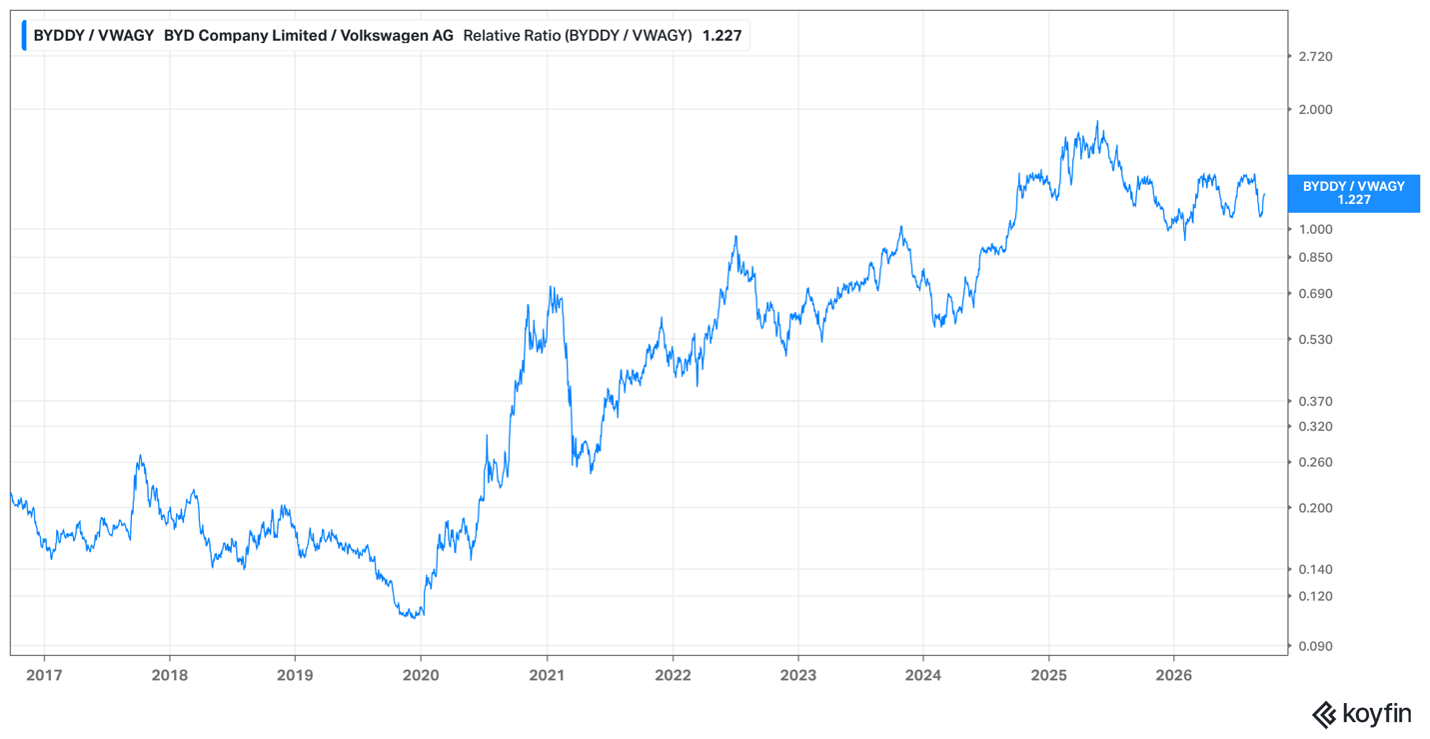
It’s no wonder the BYD share price has been outperforming that of the European bellwether, Volkswagen, for over a decade now:
I wrote a few weeks ago that I had bought a new car. The car is a fully electric BYD Atto 2. It’s a midsize SUV with an advertised range of 350 km. This is the car:
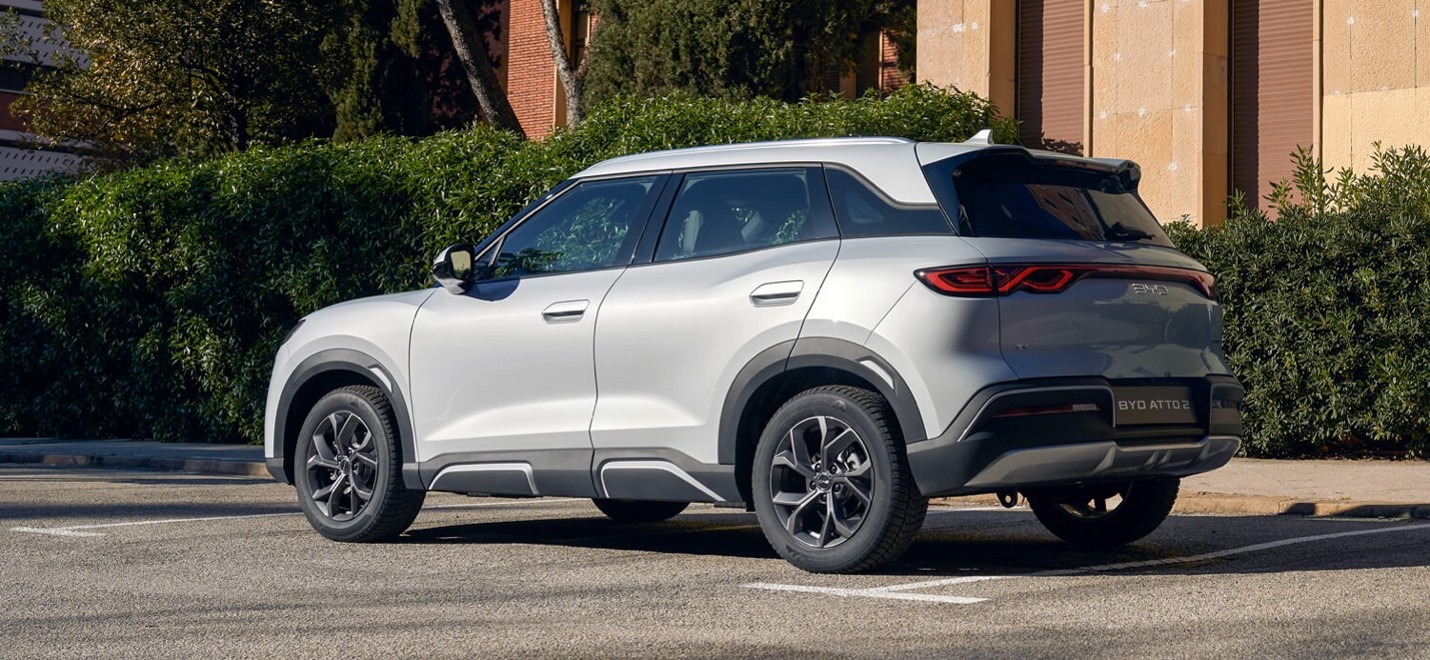
My impressions after driving the car for a couple of weeks are as follows:
- It’s a town car. On the open road, the range is substantially less than 350 km. I needed two charges to get from Knysna to Cape Town, just over 500 km.
- Charging takes longer than I had hoped. Going from 20% to 100% takes about an hour, and that’s only if you can find a fast charger, which isn’t always guaranteed.
- The ride quality is great, and so is the overall feel of the car. To me, the BYD feels like a German car.
- The price! It costs roughly half as much as a new BMW X1, which is similar in size.
- Also, the total cost of electricity I used between Knysna and Cape Town was R250. My ex-German car used over R1,000 worth of petrol for the same trip. And the BYD only needs servicing every 2 years!
- The tech in the car (driver-assist, lane-keep, distance control, 360-degree camera, electric seat adjustment, etc.) is as good as a luxury German car that costs 5 times as much.
Apart from the price, the main reason I bought the BYD is its battery technology. BYD’s blade battery uses LFP (lithium iron phosphate) chemistry, which is unusually tolerant of being charged to 100%. BYD has primarily optimised for safety, durability, simplicity and cost, whereas European premium manufacturers have historically prioritised energy density, range and performance, generally using nickel-rich NMC chemistry. Although these batteries charge faster and offer longer ranges, they are more expensive, less safe and degrade faster. BYD makes its own batteries, so it can integrate them into the car’s manufacturing process. European cars use external technology that is less well integrated.
In short, I expect my BYD to have a much higher resale value than European EVs. If you start with a 30% to 50% price advantage, it’s a sweet deal.
Here’s a YouTube video that compares German EVs to Chinese EVs.
My take: The advantages of a Chinese (specifically a BYD) EV make it a compelling buy. The brand loyalty some people have to German cars will eventually wear off. When I was growing up, Japanese cars were seen as “Jap scrap”. Today, certain signifiers show you have “arrived” in South Africa. Driving a white Toyota Land Cruiser is one of them. Fashions change.
In The Cockroach
No trades this week in the local Cockroach fund* (the MWI Worldwide Flexible Fund).
Trades are being implemented to bring the new US$-based cockroach fund into line. This should be finished by next week, when I will report on the fund’s position. It will align with the Rand-based fund, with minor deviations due to a slightly less short-sighted regulatory environment.
In the meantime, here is what the bond portion of the local Cockroach portfolio looks like:
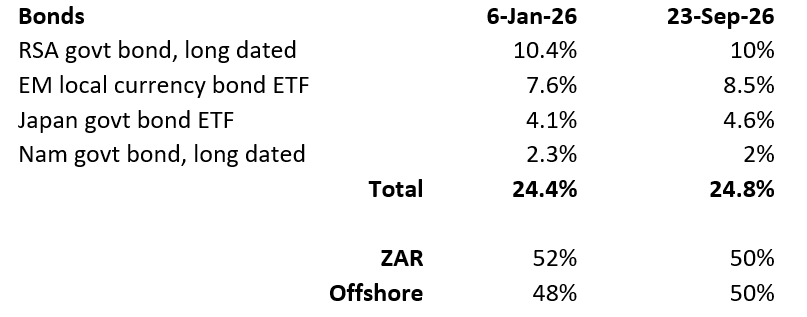
I last wrote about this portion of the fund in July. Nothing has changed since then. What has happened is that the risk spread of South African bonds over US bonds has continued to narrow:
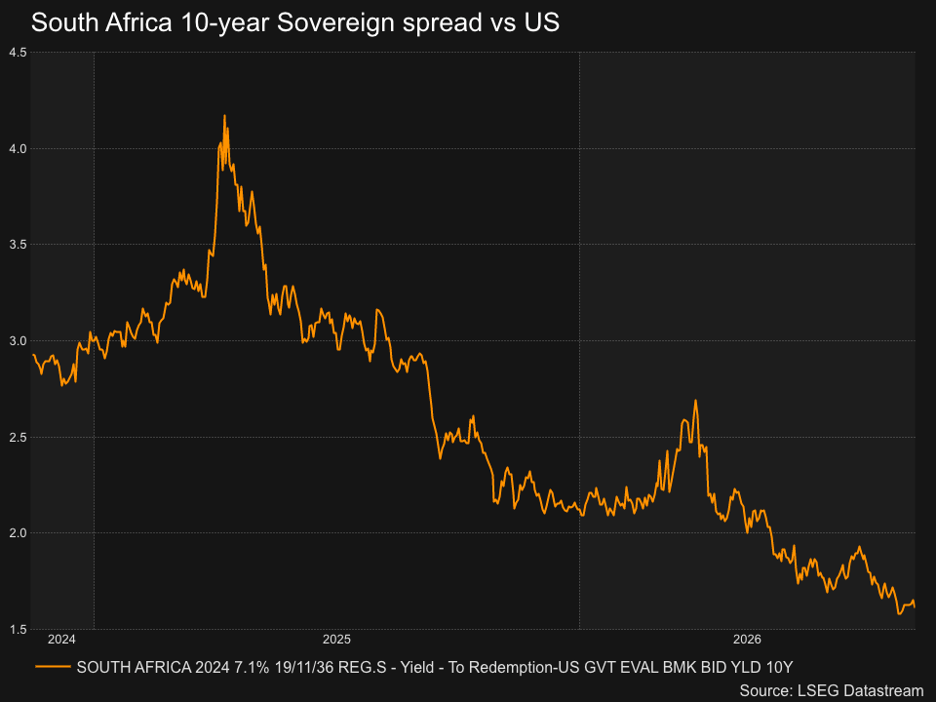
At some point, it will make sense to start swapping South African bonds back into US bonds. But I think the biggest opportunity here is that the price of South African risk assets, like “SA Inc” equities, has not benefited from the (significantly) lower spread. We are seeing increasing acquisitions of local companies by offshore buyers, which might reflect this lower discount rate.
* I manage the fund on behalf of Merchant West Investments (Pty) Ltd (FSP 44508)
In The Media
1. Book review – Caledonian Road by Andrew O’Hagan (2024)
Never having heard of Andrew O’Hagan before, I suppose I was attracted to the book because it plays out around Islington – the Caledonian Road, to be precise. That happens to be the heartland of Arsenal, my favourite English football club. As I always point out to anyone who will listen (and even those who won’t), Arsenal won the league last year.
Arsenal does not feature in this book, not even tangentially. Instead, it is a sprawling tale of British life in the post-pandemic period. It has characters ranging from Dukes to businessmen to upper-class liberals to working-class youths. All intertwined in that very special English deceit – that everything is not as it seems on the surface.
The book’s central idea is that we often think our beliefs determine our behaviour. In contrast, our incentives, dependencies and desire for status exert a much greater influence than we care to admit. O’Hagan develops his characters in detail, sometimes too much, and as a result verges on caricature.
It’s almost like Dickens meets Wolfe: a sprawling English cast of interrelated social classes set in London, mixed with status anxiety, class ambition and the interaction between money, media and personal vanity. I do think that O’Hagan’s prose doesn’t quite explore the psychological depths that Wolfe and Dickens do. Its greatest strength is its understanding of the gap between what people profess to believe and how they behave.
I recommend this book to anyone interested in how incentives shape human behaviour. Apart from that, it’s simply an enjoyable read.
2. Some funny things
I saw two really funny things this week:
- Howard Lindzon, an interesting mix of a comedian and venture capital investor, turned 61 and had the following to say: “According to the actuaries, I have 21.04 years to live. If I were in my 50s, I would round that number down, but not in my 60s. That .04 is a few good weeks of watching YouTube and Netflix. Ellen is 11 days younger than me, and her life expectancy from here is 23.9 years. I am surprised more men in their 60s are not transitioning for those 2.9 extra years.”
- Someone sent me this explanation of how AI economics works.
I’m writing this to you from Knysna, where almost my whole family is getting together. It’s a joy for me to spend this time with them.
That’s it for this week.
Remember to be careful out there.
Piet Viljoen
RECM
24 September 2026