
Dear Fellow Investors and Friends,
Welcome to my newsletter, where I share my efforts to understand markets and the world around me.
I appreciate you taking the time to read this. Feedback is welcome; feel free to drop me a line. It’s great to start conversations.
Today is Thursday, December 18th, the 352nd day of the year. This will be my last letter for the year, as I am writing to you from Knysna, where our family will be spending some time together – if the water supply holds. The stupid politicians here in Knysna have been so busy awarding each other salary increases that they haven’t had the time, money or inclination to maintain the infrastructure. If it weren’t so sad, it would be funny.
What is funny is the amount of fortune-telling and soothsaying that habitually starts taking place at this time of year. Every market strategist and investment analyst explains to us in great detail what will happen in markets next year, as if it even mattered.
Pink Floyd asks the right question:
[LYRICS OF “WISH YOU WERE HERE” – TO BE ADDED BY RECM; omitted because they are third-party copyrighted text]
As the year winds down and the summer holidays suddenly become a reality, we can look forward to creating some space for reflection. In many ways, 2025 was a mundane affair. Not too much to panic about in markets, with most asset price charts trending up and to the right. But, underneath the hood, generational shifts may be taking place.
David Foster Wallace told this story in his 2005 commencement speech at Kenyon College, “This Is Water”:
Two fish are swimming along in a river or the ocean. After a while, one fish turns to the other and asks, “Hey, how’s the water?” The second fish looks puzzled and replies, “What water?”
The story illustrates how we tend to accept our current reality without question. Things are as they are, and we extrapolate current conditions unquestioningly into the future. That’s just human nature – we don’t like change, and we’re awful at forecasting change. In fact, we’re bad at forecasting anything, let alone change.
This is one of the reasons markets are so cyclical. The lessons learnt by one generation of financial analysts fade from memory by the second generation and are entirely forgotten by the third. As a result, in financial markets, knowledge is cyclical rather than, say, in physics, where it is cumulative. In markets, mistakes are repeated. Neil Howe’s (the author of the Fourth Turning) theory of generational shifts relies on this pattern.
So, what does the financial water we swim in today look like?
- The 60/40 (i.e. 60% equity, 40% bond) asset allocation strategy became widely used and accepted as standard over the past 40 years. This was a period when inflation and bond yields declined, while equities were strong. But if we enter a period of inflation, these relationships – and the robustness of the 60/40 portfolio – might break down.
- Historically, oil prices and the US dollar have moved inversely. But recently, as other currencies have reduced the dollar’s dominance in the oil market, oil prices have weakened, while the dollar has also weakened. Is this long-held relationship undergoing a sea change?
- It used to be that when interest rates went up, the stock market declined, and vice versa – see the 60/40 portfolio. But over the past few years, interest rates have risen, while global stock markets have been strong. Have things changed?
- Historically, an ounce of gold could buy around 15 or 16 barrels of oil. There were swings around this, but the relationship was stable. Over the past few years, gold has rocketed, while oil prices wallow at low levels. Today, one ounce of gold buys 53 barrels of oil. What’s going on?
- Indexation has come to dominate equity markets over the past 30 years. Most sensible investors have at least a portion of their equity – and sometimes even bond – exposure invested passively. But indices have become super concentrated over the past decade. Do they still offer diversification benefits?
- We have all come to believe in American exceptionalism. Today, the US stock market accounts for over 70% of global market value. US GDP is only 24% of global GDP. As a result, most investors are heavily over-indexed to the USA. Will America stay exceptional forever?
Regularly refreshing the water in fishbowls is necessary. But the fish don’t know when it will happen, and most certainly can’t make it happen. Like the fish, we know as little about the future and have as little control over it. So how do we deal with this uncertainty?
One of the major themes in my writing over the past few years has been how to deal with change.
- In one of my first letters, “Regime Change” I summarised my strategy as “rather than try to optimise a portfolio for the best return under a given forecast, I try to optimise a portfolio for a reasonable return under any future possible outcome.”
- Then, in “Turkey Moment” I explained how to avoid the surprising moment a turkey has on Thanksgiving Day, when its head gets chopped off after being carefully fed and looked after daily in the months leading up to Thanksgiving.
- Given that most forecasts are not very useful, I believe one must come up with something else on which to base investment decisions. In “No Forecast Required” I explained how I put together a sensible portfolio without relying on forecasts.
Basically, it boils down to doing three simple things:
- Diversify – remembering that you are only properly diversified if there is at least one asset in your portfolio that is causing you discomfort.
- Add anti-fragile assets, such as physical gold, to your portfolio. These types of assets are generally not included in conventional portfolios, so you need to look outside the usual places for such assets. And be able to live with the occasional discomfort that comes with owning such assets.
- Sit back and let things unfold as they wish. And don’t worry about all the forecasts out there. Almost none are correct, and the few that are, are impossible to pick out. No one can tell.
In The Markets
1. Property is not an investment
Property as an asset class attracts more than its fair share of emotions. It’s tangible, and a big, fancy property can give you bragging rights. But it’s fair to say that the intense emotions attached to property often leads to poor investment outcomes.
For example, I know of one otherwise highly rational businessman who is more than happy to buy a property on an 8% yield but unwilling to invest further into one of his businesses on a 20% dividend yield. The property will most certainly require investment over time and will be subject to local and central government taxes. It will also face vacancies from time to time. The business, not so much.
Go figure.
Over the past few weeks, there has been a spate of REITs (Real Estate Investment Trusts) doing accelerated bookbuilds. Through this process, they have been able to raise capital at prices close to their NAV. The market is so eager to give them capital that they don’t even need to disclose what they plan to use it for.
Go figure.
What do you get when you buy a share of a REIT? Firstly, you get a portfolio of properties. You also acquire some debt linked to those properties, typically around 40% of their value. Finally, you are acquiring a management company which manages the properties on your behalf – otherwise known as a cost centre. And property managers don’t come cheap. For instance, last year the top 3 executives of Growthpoint earned R83mn, 46% higher than the previous year.
The NAV (net asset value) of a REIT includes updated property valuations and deducts the value of the debt. It does not include the present value of the management company’s costs, which are not always clearly disclosed in REIT financial statements. But a guesstimate would be around 0.5% to 1% of the asset base. Properly capitalised and then deducted from the NAV would reduce the NAV attributable to shareholders by up to 15%. Yet these REITs can raise seemingly unlimited amounts of capital at or near NAV.
Go figure.
Now this would be understandable if REITs were outstanding performers. But over the long term, they have destroyed shareholder value. Here’s a table showing the 10-year performance of the 10 biggest REITs in South Africa:
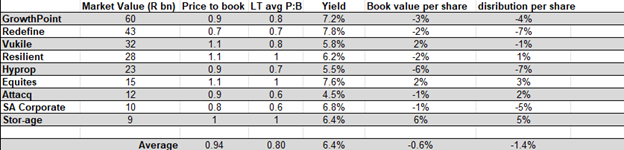
Since 2016, these companies have gone backwards: both the NAV (book value) per share and the distribution per share have declined. Yet these stocks trade at or close to NAV and yield very little.
Go figure.
My take: If you feel lucky, you can play the inevitable cyclical bounce in these stocks from time to time and make some money. Or you can lever them to the hilt, and if you survive, you might make some money. But if you hold on for too long, you will lose money. Let me state it unequivocally: property is not a good long-term investment. The juice is not worth the squeeze.
2. What’s going on at HCI?
I first wrote about the aggressive campaign by Aktiv Asset Management against HCI management, specifically their CEO, Johnny Copelyn, a few weeks ago in this piece.
This week, Aktiv published some more wild allegations on their Substack, here.
Mr. Copelyn answered Aktiv’s questions in an open letter, which you can read here.
After reading both sides of the argument, I will leave you to make up your own mind. But I would make the following comments:
- Aktiv seem to have a fixation with HCI – they don’t talk about any other company.
- They are entirely anonymous; you can’t see who the people in this asset management “firm” are. They have no website or any other item of corporate veneer.
- Over the past 10 years, under Mr Copelyn’s stewardship, HCI’s NAV per share has grown by over 10% p.a.- outpacing the JSE All Share Index. And way better than any REIT, for that matter.
What this all boils down to is that the people behind Aktiv (whom I happen to know) are trying to force HCI to unbundle their assets. If HCI were to do so, these stocks would trade way below fair value – like all small caps on the JSE. Leaving them vulnerable to buy-outs on the cheap, by people who know the businesses well. Like the people behind Aktiv.
Here’s another fact: today, you can buy HCI’s NAV at half price.
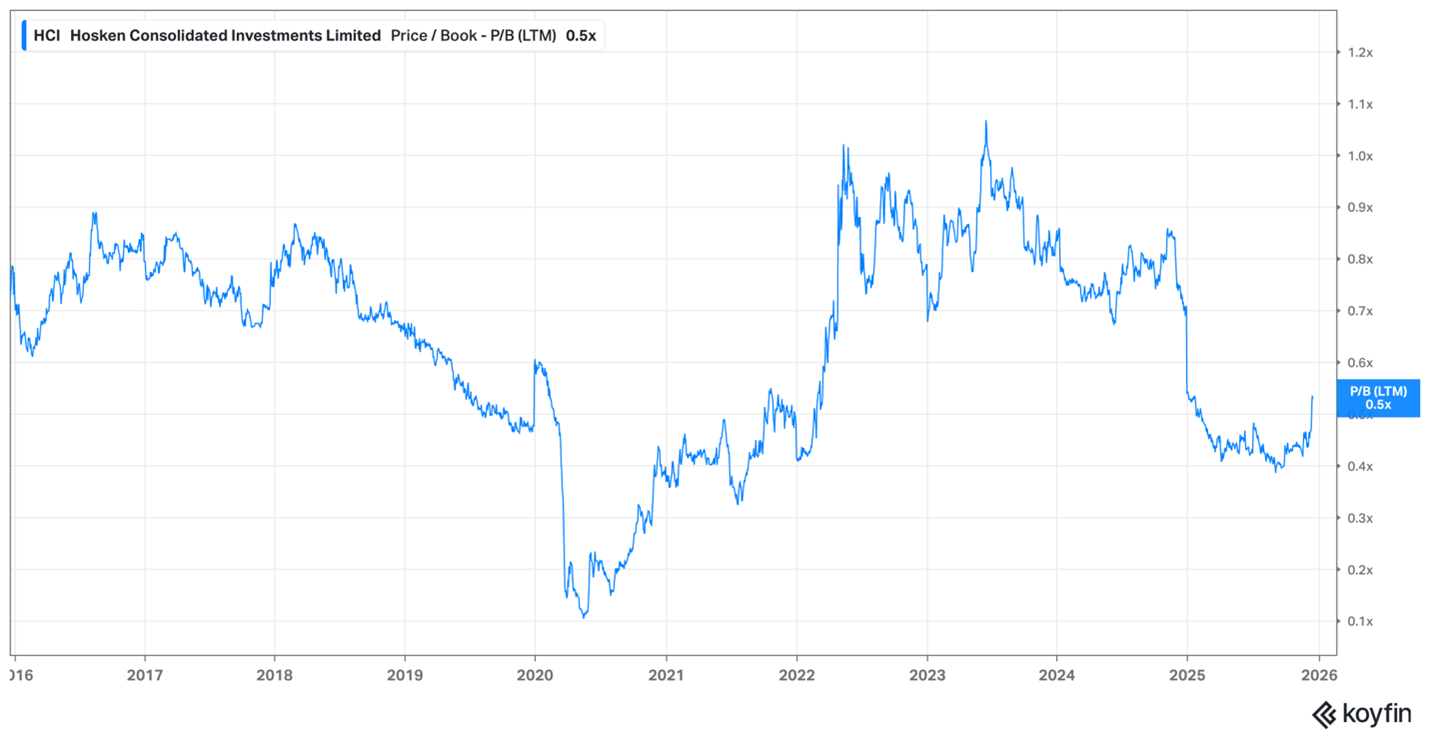
Which HCI is doing, as it has just announced a buyback of R650mn worth of shares. It has also announced a transaction in which it will effectively buy back a substantial amount of its own shares from one of its shareholders in exchange for a portfolio of properties. Both transactions are tremendously value accretive on a per-share basis.
Simultaneously, Mr. Copelyn has purchased R118mn worth of HCI shares for his own account.
My take: While Aktiv posts on Substack, Mr. Copelyn puts his money where his mouth is. To be clear, I own HCI shares, and it is one of the biggest positions in the MWI Value fund. I am thankful for Mr Copelyn’s services and trust him to continue creating value for shareholders into the future.
3. File under: “So you think you can tell”
Danish pharma company Novo Nordisk had the first popular GLP-1 drug, Ozempic. Initially, it was prescribed to lower glucose levels in patients with diabetes. But as the benefits of this type of drug for weight control became more widely known, Novo’s share price went on a tear. At its peak, Novo Nordisk’s market value briefly exceeded the size of Denmark’s entire annual GDP.
Unfortunately, Novo Nordisk underestimated the drug’s popularity and struggled to meet demand, opening the door for competitors. Of course, disappointment followed the high expectations built into the share price:
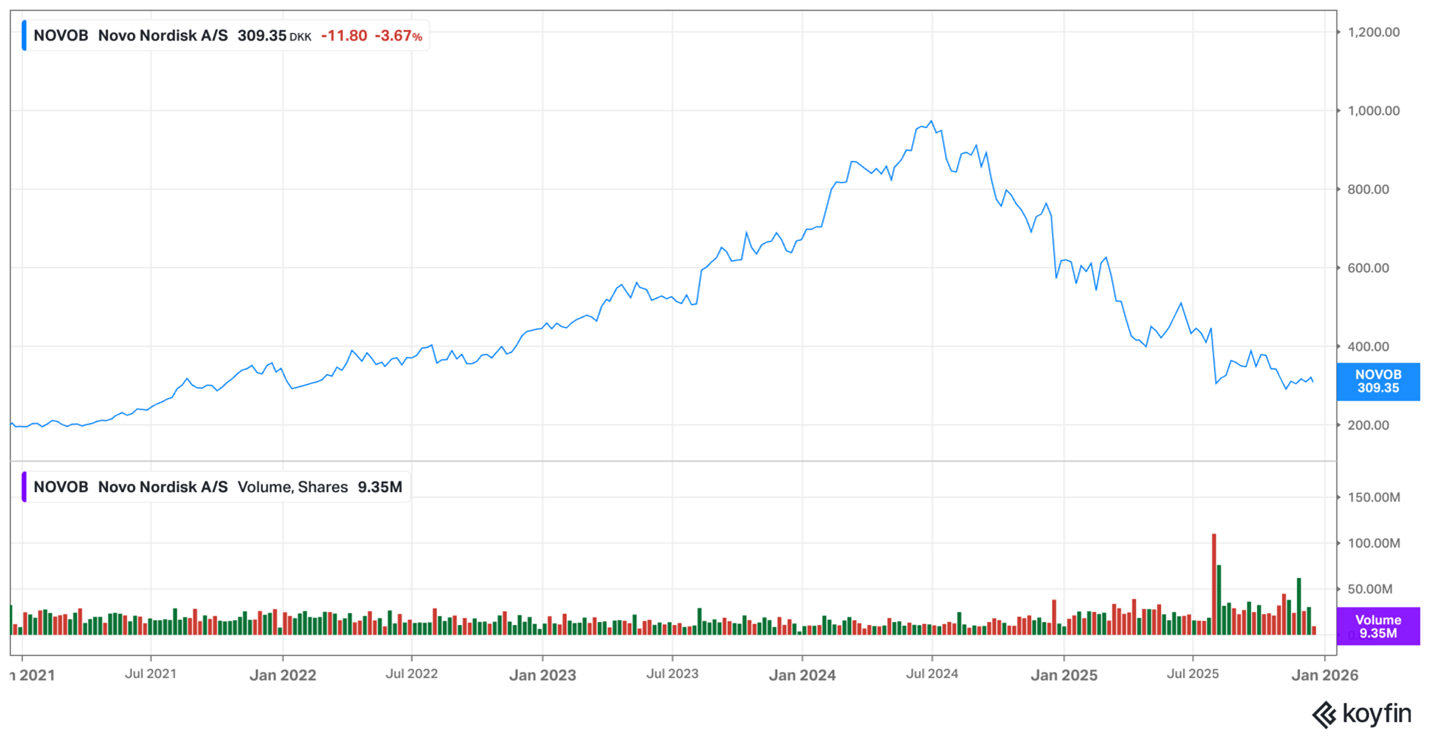
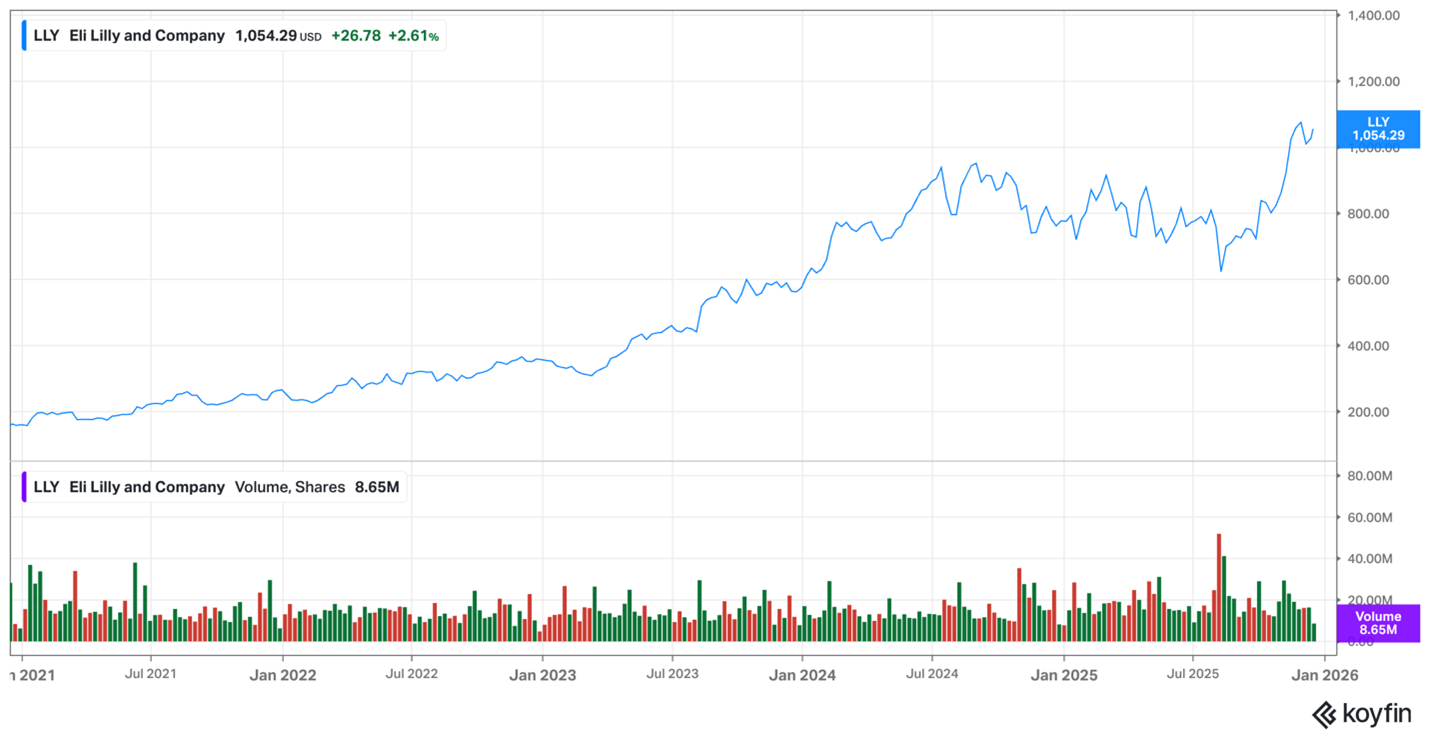
Interestingly, the first drug based on GLP-1 to reach the market was Byetta, way back in 2005. Amylin Pharmaceuticals developed it in partnership with Eli Lilly and it is a synthetic version of a GLP-1-like peptide originally found in – wait for it – Gila monster venom. It’s no surprise that Eli Lilly was the company that put its foot in the crack of the competitive door accidentally opened by Novo and shoved it wide open. Today Eli Lilly is the market leader with Mounjaro, and the share price reflects this:
As the benefits of the drug become more widely known, a growing list of big pharma and smaller biotechs are developing competing GLP-1 drugs in injectable and oral formats. Who knows who will come up with the next big winner?
Do you think you can tell?
My take: The more I read about them, the more generally positive the attributes of GLP-1 drugs seem to be. I would not be surprised if most people start taking them even if only in small doses. But, as with all new, hot products, my strategy is not to invest in the shiny new thing itself (high expectations are a cruel taskmaster), but simply to avoid investing in the things it displaces or disrupts. Alcohol and highly processed snacks would be top of my list.
4. File under: “you can’t make this stuff up”
Cisco was the king of the internet back at the start of the century. It was regarded as one of the hottest stocks in 2000 because it sat at the centre of the internet build-out. As a “picks and shovels” supplier in the dot-com era, it grew rapidly. Its share price reached an intraday level of $77 in March 2000.
At that price, it traded at 35 times sales, and well over 100 times earnings. These multiples were simply an expression of the market’s high expectations for Cisco’s future. Reality turned out even better: the internet has been a massive game-changer over the past 20 years, exceeding almost everyone’s wildest expectations.
Except for those of Cisco’s shareholders. Last week, Cisco reached a new all-time high, surpassing its March 2000 share price for the first time, 25(!) years later:
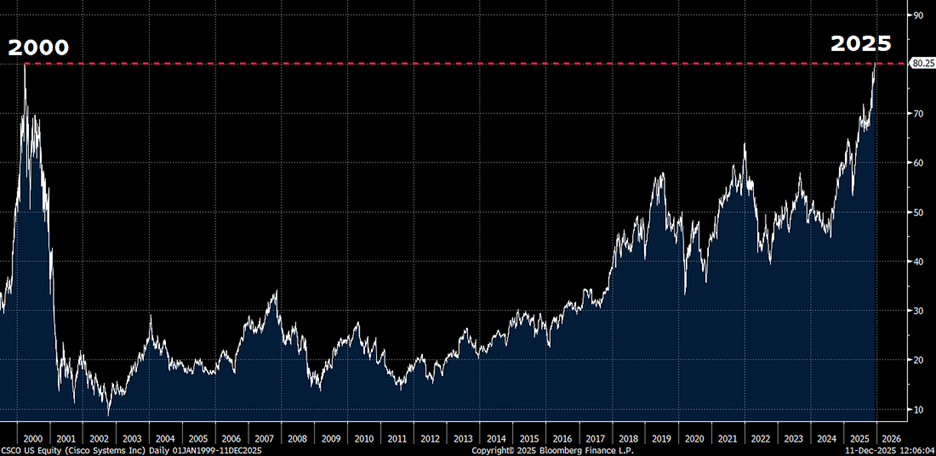
As I said, high expectations can be a cruel taskmaster.
Interestingly, when Cisco reached its previous high, Warner was being acquired by AOL, the biggest corporate merger of all time. AOL bought Time Warner to combine “new economy” internet distribution with “old media” content and cable infrastructure, aiming to dominate digital media in the internet era.
Fast forward 25 years, and today, Netflix, the dominant internet media distributor, is trying to acquire Warner. To dominate digital media in the internet era, of course.
Today, Nvidia is the dominant provider of picks-and-shovels in the AI era. Nvidia trades on 23 times sales and a 44 P/E multiple.
Let’s see what happens.
My take: History never repeats, but it rhymes. Right now, it’s rhyming like some kind of intricate haiku.
In The Media
1. The best music of 1997
My journey through time continues.
1997 was quite a year! The music was good…but the markets were better. We experienced a raging bull market, with IPO’s happening almost daily. Well, not quite daily, but there were 35 during the year. I think we ended up with nearly a thousand listed companies on the JSE by year-end. Today, there are only around 400.
How times change…
At the time, small-cap growth was all the rage, and Investec Asset Management (IAM), where I worked, was riding the crest of that wave. It had a fund called the Investec Emerging Companies fund that was shooting out the lights, winning all the awards and pulling in the AuM. It was the fund that put IAM on the map and was key to our success in those early years. That fund still exists today, but no one really cares about it.
How times change…
What doesn’t change is good music, and 1997 had more than its fair share.
Here’s my list of the top 10 albums on Apple Music, and here it is on Spotify. It features one of the best albums of all time, Radiohead’s “OK Computer”. Also, Modest Mouse’s edgy “The Lonesome Crowded West” – which, looking back from 2025, was one of the most underrated albums of the year.
Plus, a lot of other good stuff.
Here are the top 20 songs on Apple Music and on Spotify.
As usual, ranked from number 20 to what I consider the song of the year, Karma Police by Radiohead. It also includes “Into My Arms” by Nick Cave, which Amanda and I chose as the theme song for our wedding reception. And, the banger of the year, “Song 2” by Blur.
And here is the long list of the best songs of the year, only on Apple.
2. The word of the year
Every year, Merriam-Webster (a major American publisher of dictionaries) picks a “word of the year”. This year, they chose the word “slop” to refer to demonstrably fake content produced by AI. “Slop” was first used in the 1700s to mean soft mud, but it later came to mean something of little value. The definition has since expanded to mean “digital content of low quality that is produced in quantity by means of artificial intelligence.”
I don’t really have an investment takeaway here, except to say that a producer of slop doesn’t sound like something I would want to invest in.
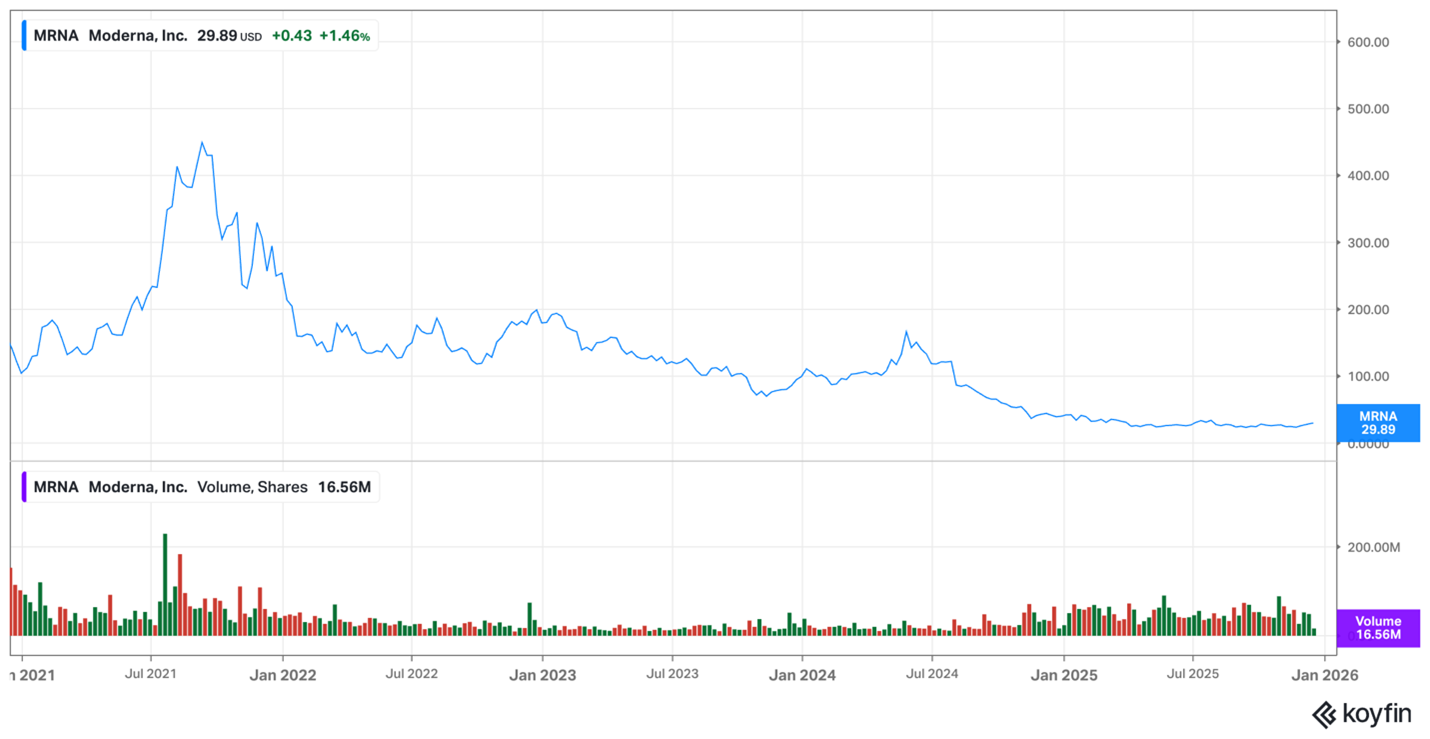
By way of reference, in 2021, the word of the year was vaccine. Here is the share price of Moderna since 2021:
3. Important ideas for 2026
Finally, and more seriously, here’s a list of the 26 most important ideas for 2026, by Derek Thompson. For those too lazy to read the whole thing (which I hope is in the minority here), the ideas fall into three main camps:
- Everything is TV. As a result of the popularity of TikTok, YouTube, Netflix and even podcasts, no one reads anymore:
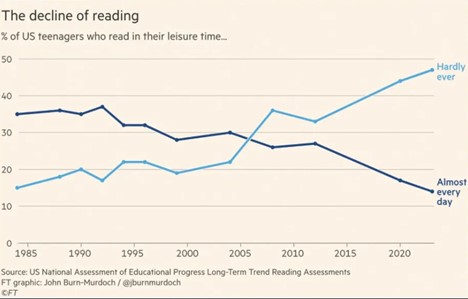
There are all kinds of consequences: fewer books printed, movie theatres going out of business, and reduced cognitive ability. Will being able to read become a superpower?
- Alcohol is over. GLP-1s are seeing to that:
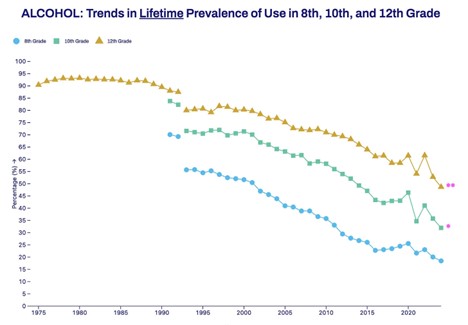
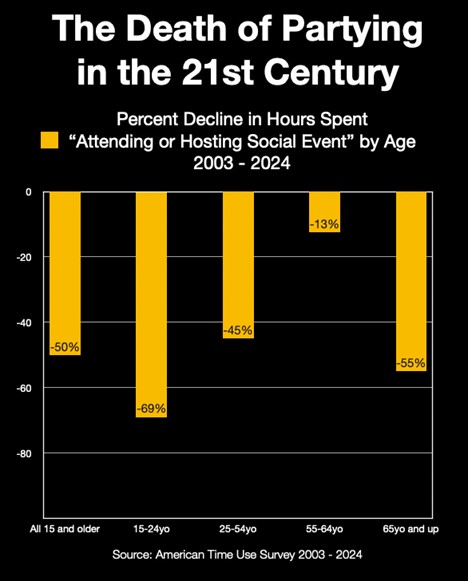
Unfortunately, this also has a negative consequence: less socialising taking place:
- The Casino Economy
Everything is becoming a gamble – sports, markets and even predictions. As young people become less socialised and increasingly locked out of the real economy through high house prices, etc., they are turning to gambling. Of course, demand is being met by supply, as regulations against gambling are relaxed in the interest of government revenue, as governments are increasingly short of cash.
Finally, the killing of 15 Jews in Bondi, Sydney, this week was a shocking reminder of the fact that there are many really sick people out there. To all my Jewish family and friends, happy Hanukkah! Don’t let the depraved maniacs dim your light – instead, let it serve as a reminder to be proud of your community and to find strength in it.
I stand with you, against these racist antisemites.
To my Christian family and friends, merry Christmas!
And I hope everyone has a good break, even if it is only for a few days.
This is letter number 46 for the year, and the last one. See you in 2026.
But remember to be careful out there!
Piet Viljoen
RECM
18 December 2025